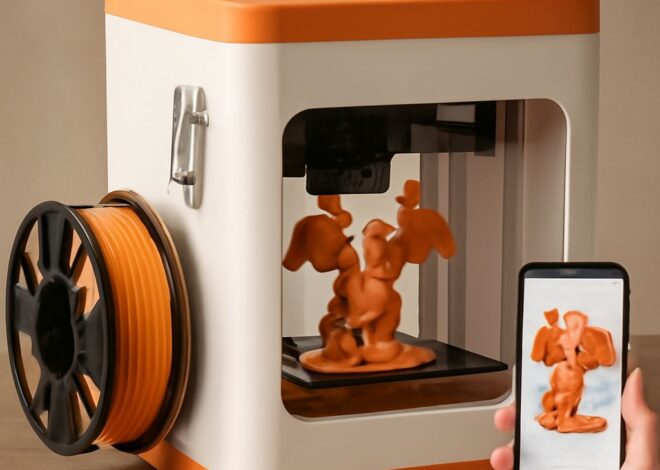
Understanding CAD Systems in 3D Printing
Imagine you’re about to embark on a creative journey, where the fusion of digital precision and tangible creation becomes your playground. You sit at your computer, ready to dive into a world where CAD softwares revolutionize 3D printing, enabling you to transform ideas into reality. This is the realm where understanding computer aided design definition is not just beneficial but essential for innovation.
You find yourself pondering: What exactly is a CAD system, and how does it function? How do these digital tools empower creators to develop the intricate models needed for 3D printing? As we delve into these questions, you’ll discover the fundamental roles these technologies play in shaping the future of design.
What is a CAD System and How Does It Work?
A CAD system, short for Computer-Aided Design system, is a sophisticated tool used to create detailed digital models. Its primary function is to assist in designing by allowing users to draft and modify designs with precision. The process involves defining geometric shapes in a virtual space, which can then be rendered from any angle or perspective.
By utilizing CAD tools, designers can visualize their projects in three dimensions, facilitating a better understanding of how components will interact. The system employs mathematical algorithms to ensure accuracy, providing a comprehensive platform for innovation in design.
These systems are not only about drawing; they involve the application of simulation, analysis, and optimization, which are crucial in developing prototypes that are ready for the 3D printing stage. A seamless CAD workflow enhances the designer’s ability to iterate and improve designs effectively.
Why Are CAD Softwares Essential in 3D Printing?
CAD softwares are indispensable in the 3D printing process. They act as the bridge between conceptualization and physical creation. Without CAD tools, creating the precise digital blueprints necessary for printing complex structures would be nearly impossible.
The software allows for intricate calculations and adjustments, making it possible to fine-tune every aspect of a design. This flexibility is particularly vital when dealing with the unique challenges and parameters of 3D printing, such as material constraints and layer resolutions.
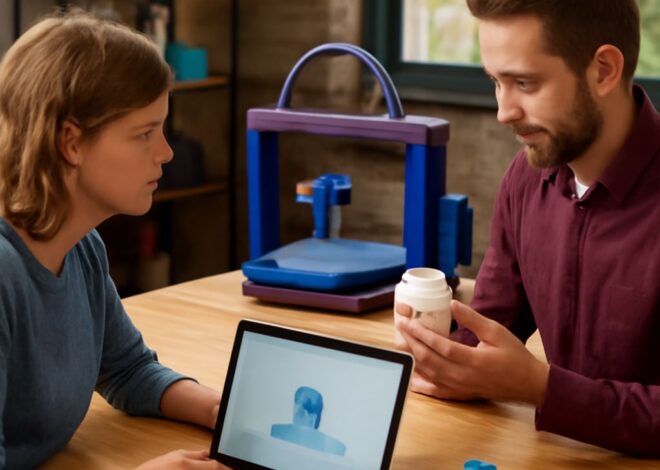
Moreover, CAD applications provide a robust platform for collaboration. Teams across different locations can work on the same project, sharing insights and making real-time modifications. This collaborative nature ensures that the final printed product meets all design specifications.
Exploring the Role of CAD Technology in Modern Design
CAD technology has transformed modern design by introducing a level of precision and creativity previously unattainable. The ability to simulate real-world conditions and test designs before physical production reduces waste and fosters sustainable practices.
The role of CAD tools extends beyond mere drafting; they enable detailed simulations that predict how a product will perform under various conditions. This foresight is invaluable in industries such as automotive and aerospace, where safety and functionality are paramount.
Furthermore, CAD technology promotes innovation by providing designers the freedom to experiment without the constraints of traditional prototyping methods. This experimentation leads to breakthroughs and advancements in design, contributing significantly to the evolution of various industries.
The Importance of Understanding Computer Aided Design Definition
Grasping the computer aided design definition is crucial for anyone involved in 3D printing and design. It encompasses not just the use of software but also the methodologies and principles that drive successful design outcomes.
A deep understanding of CAD involves recognizing its potential to transform ideas into actionable designs. It requires familiarity with the tools and techniques that enable intricate modeling and precise production workflows.
Ultimately, mastering CAD concepts opens the door to endless possibilities in innovation. It’s about combining technical skill with creative vision to push the boundaries of what can be achieved through design. Those who invest in learning these principles position themselves at the forefront of technological advancements in design and manufacturing.