Understanding Different Types of USB Cables
Imagine you’re at home, your smartphone battery is critically low, and you’re eager to recharge it as quickly as possible. You rummage through a drawer filled with various types of USB chargers, each with different shapes and labels, and you wonder which one will get the job done fastest. The confusion grows as you realize that some cables promise rapid charging but look similar to others that don’t. You also notice a unique square USB connector that doesn’t fit your phone. Understanding USB C speed and other types of USB cables is crucial to ensure efficient charging and compatibility with your devices.
As technology advances, so does the variety in USB cables. From the compactness of USB C connectors to the robustness of square USB designs, each type serves a distinct purpose. To make informed choices for your devices, it’s essential to comprehend these differences and how they impact device performance.
What Are the Different Types of USB Cables?
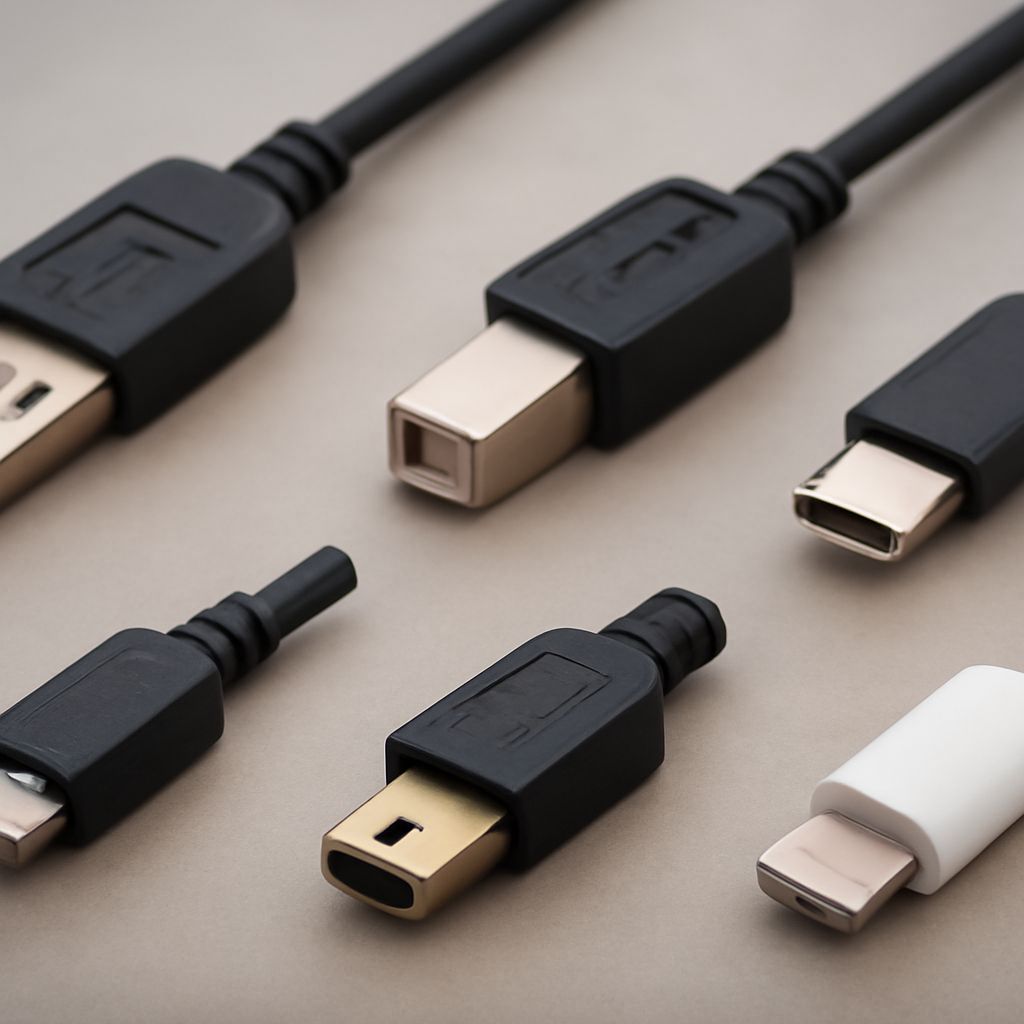
USB cables come in several forms, each designed for specific connectivity needs. The most common types you might encounter include USB Type-A, USB Type-B, USB Micro, and USB Type-C. These cables have evolved from the classic rectangular shape to more efficient designs.
The USB Type-A, typically used in computers and chargers, offers widespread compatibility. USB Type-B, with its square shape, is often found in printers and other peripherals. Micro USB cables, smaller and more compact, are prevalent in older smartphones and portable devices.
USB Type-C, however, is becoming the new standard. This cable is smaller, more versatile, and capable of handling higher power and data speeds. Understanding the different USB cable types can help you select the right one for your needs.
How Do Types of USB Chargers Vary?
Diverse USB chargers cater to different charging requirements and device specifications. Chargers can differ based on output power, port configuration, and compatibility with fast-charging technologies.
Wall chargers and portable chargers may have varying output ratings, affecting how quickly they can recharge a device. Some chargers feature multiple ports, allowing you to power several devices simultaneously. Additionally, USB chargers supporting technologies like Quick Charge or Power Delivery can significantly enhance charging speeds.
Identifying the right charger involves considering the type of device you have and its charging needs. With the variety of USB chargers available, making the right choice ensures efficient charging.
Why Is USB C Speed Important?
USB C speed is a critical factor in modern device connectivity. With its enhanced data transfer and power capabilities, USB C can drastically reduce the time it takes to charge devices or transfer large files.
Compared to its predecessors, USB C supports faster charging rates and higher data throughput. This makes it an ideal choice for power-hungry devices like laptops and tablets. The cable’s reversible design also adds to its convenience, eliminating the frustration of incorrect plug orientation.
Understanding the advantages of USB C speeds helps consumers make informed decisions, especially when speed and efficiency are priorities.
What Is a Square USB?
The square USB, often seen in USB Type-B connectors, serves unique purposes. Recognizable by its block-like shape, it is mainly used in printers, scanners, and other larger devices.
While not as prevalent as USB Type-C, the square USB plays a vital role in connecting devices that require stable and secure data transfer. Its robust design is tailored for devices that don’t frequently disconnect, such as desktop printers.
Awareness of the square USB’s role can aid in understanding the broader landscape of USB connectivity and ensuring compatibility with your peripherals.
Pro tips recap: Selecting the right USB cable or charger involves recognizing the distinct types and their specific uses. Embrace USB Type-C for its superior speed and versatility, while keeping in mind the importance of compatible USB chargers for efficient power delivery. Remember, understanding the diverse USB landscape ensures optimal connectivity and performance for all your devices.