Bluetooth Subwoofer Speaker Guide: Cube Speakers and Portable Bass
Bluetooth Subwoofer Speaker Guide: Cube Speakers and Portable Bass
You want genuine bass from a wireless speaker — not just the simulation of bass that most compact Bluetooth devices produce by boosting the low-mid frequencies. A bluetooth subwoofer speaker adds a dedicated low-frequency driver to the wireless audio chain, producing actual sub-bass response that you feel rather than just hear. Whether you’re looking at a cube bluetooth speaker for desktop use or a portable bluetooth subwoofer for outdoor events, understanding how dedicated bass drivers work in wireless systems helps you buy correctly the first time.
This guide covers what a bluetooth subwoofer speaker actually is, how a cube bluetooth speaker design handles low frequencies, what to look for in a portable bluetooth speaker with subwoofer, and how the bluetooth speaker cube form factor balances size and audio performance.
What a Bluetooth Subwoofer Speaker Actually Does
Dedicated Low-Frequency Drivers
A bluetooth subwoofer speaker includes one or more drivers specifically sized and tuned for bass response — typically 4–8 inches for portable units, larger for home theater satellite-subwoofer systems. The subwoofer driver handles frequencies below 150–200Hz while tweeters and mid-range drivers cover the rest of the spectrum. This division of labor allows each driver to be optimized for its frequency range rather than compromising across the full spectrum, which is why a dedicated sub produces noticeably tighter and deeper bass than a full-range driver trying to reproduce the same frequencies.
Passive Radiators vs. Ported Designs
Portable bluetooth subwoofer designs typically use passive radiators — unpowered membrane surfaces that move in response to the powered driver’s air movement — to extend bass response without the larger cabinet size a ported design requires. This is why many wireless bass speakers have a visible secondary membrane on the back or bottom of the enclosure. Ported designs (bass reflex) use a tuned port or slot to achieve similar bass extension in a larger cabinet. Both approaches work; passive radiators are more common in compact form factors because they extend bass without the port noise that’s hard to control in small enclosures.
Cube Bluetooth Speaker Design and Performance
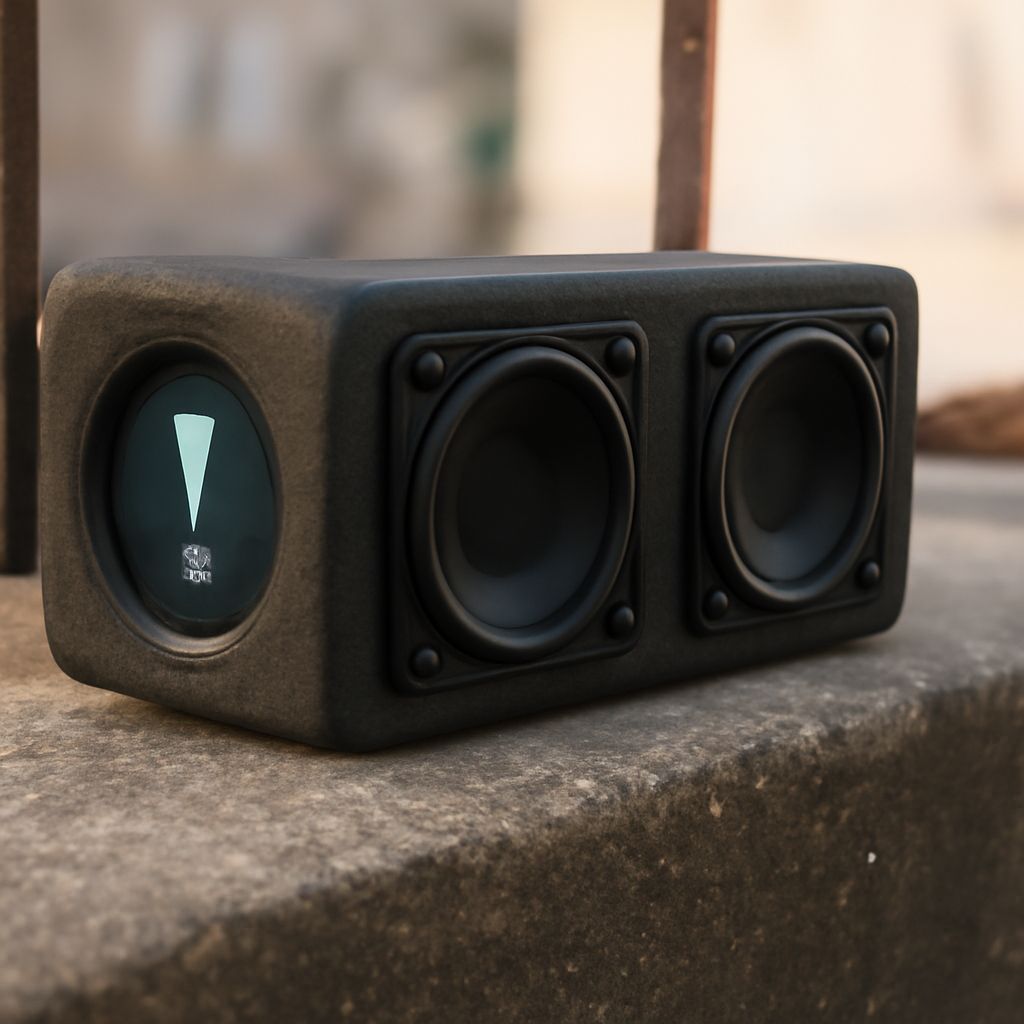
A cube bluetooth speaker packages the drivers and amplifier into a compact cubic or near-cubic enclosure. The geometry is acoustically challenging — equal dimensions in all directions create potential standing wave resonances inside the cabinet — but good cabinet bracing and driver placement mitigate this. The Harman Kardon Onyx series, UE Hyperboom, and JBL Boombox use non-cubic forms for this reason; true cube-form speakers require careful internal bracing. The bluetooth speaker cube category works well for desktop and near-field listening where the compact form factor is more important than extended bass at high volume. At moderate volumes in small rooms, a well-designed cube unit delivers satisfying bass from its passive radiator or small sub driver.
Portable Bluetooth Speaker With Subwoofer: Key Specs
When evaluating a portable bluetooth speaker with subwoofer, look for: subwoofer driver size (3 inches handles limited bass extension; 5+ inches produces meaningful output), total wattage distributed between subwoofer and satellite amplifiers, battery life at realistic volume rather than quoted minimum volume, and IP rating if outdoor use is intended. The JBL PartyBox series, W-KING T9, and Tribit StormBox Blast are frequently cited in this category for combining genuine bass response with portability. Claimed low-frequency response of 60Hz or below suggests a real subwoofer contribution; specs claiming 20Hz from a small portable unit are marketing figures rather than usable output.
Who Benefits From a Portable Bluetooth Subwoofer?
Outdoor parties and events where the sound needs to fill open space rather than a room benefit the most from a portable subwoofer speaker setup. The directionality of bass is low, meaning subwoofer output radiates in all directions — a single unit handles a surprisingly large area compared to a compact speaker. For indoor use, a portable bluetooth subwoofer is often overkill in small apartments but useful in living rooms or open-plan spaces. Desk or near-field listening in bedrooms is better served by a small two-way compact speaker where bass control at low volume matters more than raw output.
Key Takeaways
A bluetooth subwoofer speaker with a dedicated bass driver produces noticeably deeper low-frequency output than a standard full-range wireless speaker. Cube form factors work well at moderate volumes in small spaces. For outdoor or party use, choose a portable bluetooth speaker with subwoofer rated IPX5 or higher with at least 5-inch sub driver and 80+ watts total output.