Printer Alignment: How to Align Your Printer Head for Sharp Output
Your prints are coming out slightly blurry, text looks doubled, or colored images show fringing where different ink colors don’t quite line up. These are classic printer alignment problems. The good news is that printer head alignment is a built-in maintenance function available on virtually every inkjet printer, and running it takes about five minutes.
Understanding when to align printer head, how to align printer head through your printer’s utility, and how to realign printer settings when the built-in process doesn’t fully correct the problem gives you the diagnostic tools to get clean, sharp output consistently. Printer alignment isn’t a one-time setup task; it should be repeated after certain events that disturb the print head’s calibrated position.
What Printer Alignment Actually Corrects
Printer alignment corrects for small physical variations in how the print head passes over the paper. These variations cause different ink colors to land slightly offset from each other, and they cause bidirectional printing (where the head prints on both the left-to-right and right-to-left passes) to misregister.
On an inkjet printer, the head moves on a carriage rail at high speed. Even tiny variations in carriage position, media thickness, or head height create visible misalignment at high resolution. Printer head alignment measures and compensates for these variations by printing a series of test patterns and asking you to identify which version looks most aligned.
This is distinct from nozzle cleaning, which addresses clogged ink channels. Nozzle cleaning improves evenness and eliminates gaps; printer alignment improves sharpness and color registration.
When to Run Printer Head Alignment
Run a printer head alignment procedure after any of these events:
- Replacing the print head or ink cartridges (on models where cartridges include the head)
- Changing paper type significantly (switching from plain paper to photo paper with different thickness)
- Moving the printer to a new location
- After the printer has been unused for an extended period
- When print quality degrades in sharpness or color registration despite clean nozzles
Some printers run an automatic printer alignment during setup or after cartridge replacement. This automatic process is adequate for most situations but can be refined with a manual alignment if the automatic result isn’t fully satisfactory.
How to Align Printer Head: Step-by-Step
From Windows
Open Control Panel > Devices and Printers, right-click your printer, and select Printing Preferences or Properties. Look for a Maintenance or Tools tab. Most HP, Canon, Epson, and Brother printers include a Print Head Alignment option here. Click it, follow the prompts, and print the alignment page on plain white paper.
From macOS
Open System Settings > Printers & Scanners, select your printer, click Options & Supplies, and then Utility or Open Printer Utility. The printer utility window includes maintenance options including head alignment. The process is the same: print the alignment page and select the best pattern.
From the Printer’s Control Panel
Most printers can run alignment directly from the device. Navigate to Setup or Maintenance in the LCD menu and look for Print Head Alignment or Calibration. This method bypasses the computer entirely, which is useful for confirming whether alignment issues are hardware or software related.
Reading the Alignment Page and Selecting Values
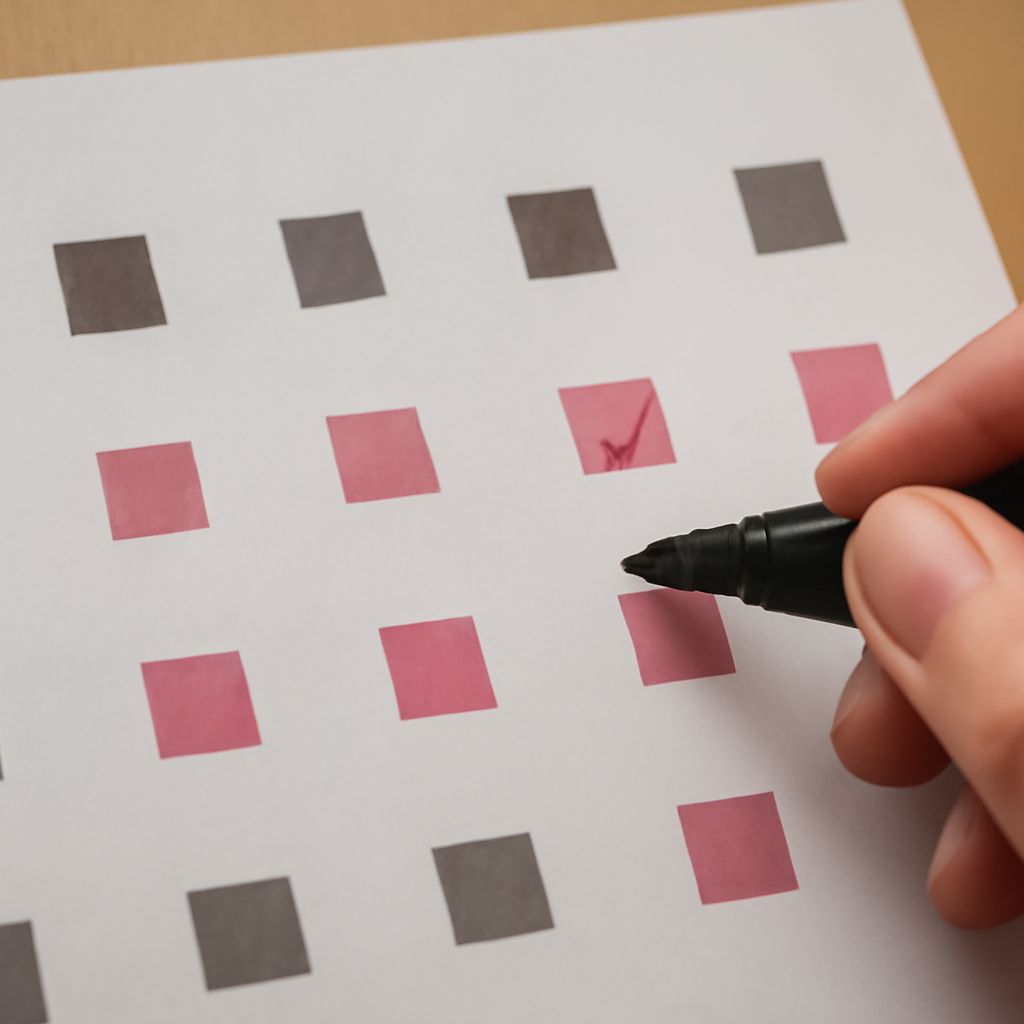
The alignment page prints numbered sets of bracket pairs, boxes, or diagonal lines at incremental offsets. Each set represents a different aspect of alignment: bidirectional registration, vertical alignment between passes, and color-to-color registration.
For each pattern set, identify the numbered sample that looks most straight, most centered, or least offset. Enter those numbers into the printer utility when prompted. The utility then adjusts the printer’s internal offset values to compensate for the measured variation.
A well-aligned printer should show improvement immediately on the next print. If the alignment page itself looks misaligned (suggesting the printer can’t even print a reliable reference), check whether the nozzles are clean first, as badly clogged nozzles make alignment pages unreliable.
How to Realign Printer When Results Are Still Poor
When alignment runs but output quality still seems off after completing the process, try these steps:
First, run alignment again. A second pass often refines values further, particularly on printers that use a manual selection process where human judgment introduces some variability.
Second, verify you’re using the correct paper type setting. Printing on photo paper while the driver thinks you’re using plain paper changes how the printer manages head height and ink volume, which affects registration even on an otherwise well-aligned machine.
Third, if misalignment appears only in duplex printing, run a duplex-specific alignment if your printer offers one. Single-sided alignment doesn’t correct front-to-back registration on double-sided output.
Key takeaways: Printer alignment is a routine maintenance step that corrects sharpness and color registration issues. Run it after cartridge replacement, media changes, or any time output looks blurry or fringed. The process takes under five minutes and requires only plain white paper and following the on-screen prompts. Most alignment issues resolve completely in one or two alignment cycles.