How to Choose a Wireless Driveway Alarm That Fits Your Property
Start by measuring the distance from the intended sensor position to a place where you can hear the receiver. A wireless driveway alert system should cover that route through the walls, trees, and other obstacles on your property.
The sensor detects movement and sends a radio signal to a receiver, which sounds a chime or another alert. Choose a detection area that covers arriving traffic without also covering the street or a busy sidewalk.
Wireless driveway alarm system components
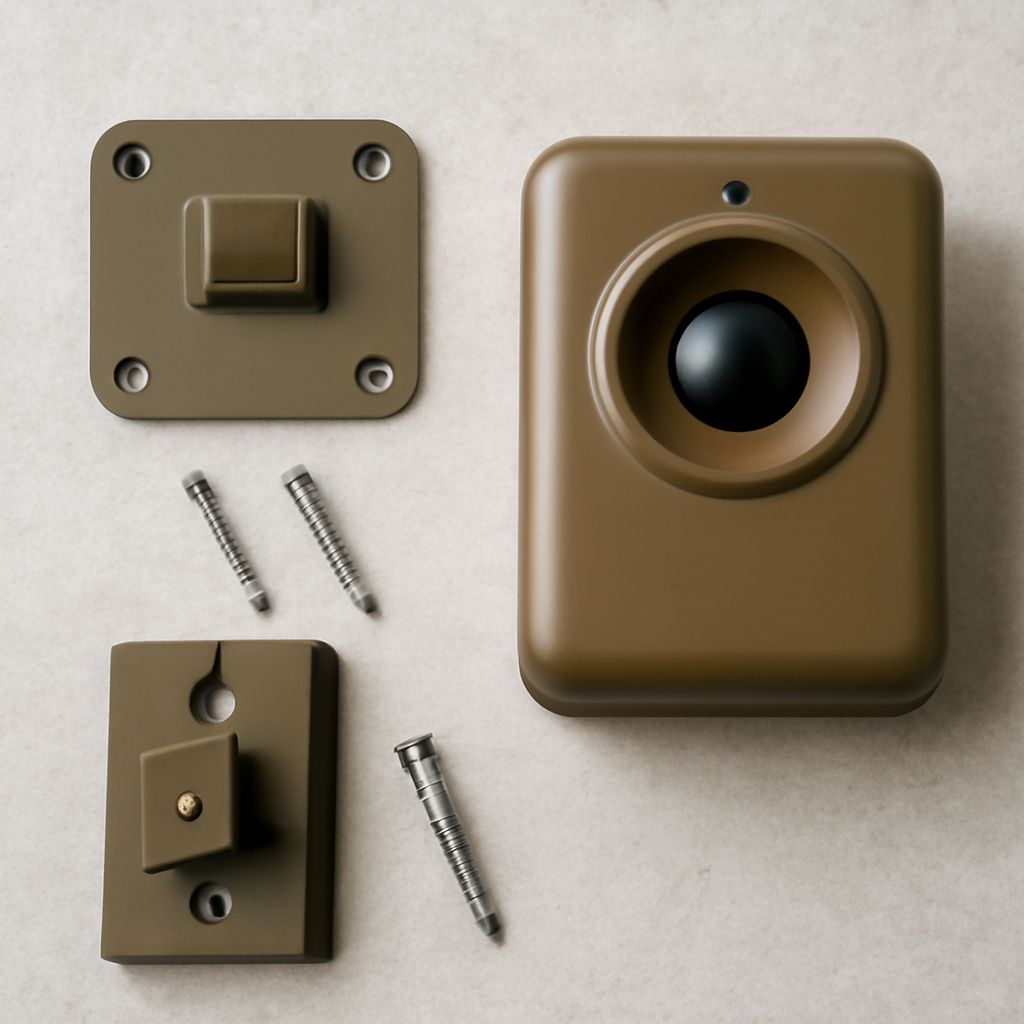
A wireless driveway alarm system typically has an outdoor sensor and an indoor receiver. Wireless driveway alarms can have different expansion limits. Some kits support additional sensors or receivers; check the particular model’s compatibility and capacity if you want coverage at more than one entrance or an alert in another room.
A passive infrared (PIR) sensor detects changes in infrared energy across its field of view. A warm person or vehicle moving across that field can trigger it, as can an animal. A magnetic probe responds to changes in the magnetic field caused by moving metal, so it is suited to detecting vehicles rather than people on foot. Compare the manufacturer’s detection pattern and range with the width and layout of your drive.
A wireless driveway alarm may offer different chimes, volume levels, or a visual indicator. When comparing wireless driveway alarms, pick a receiver you can notice where you spend time, and check whether its sound can be adjusted for your household. A driveway alarm system with a wireless connection may also identify which sensor triggered it, a helpful feature when two approaches need different responses.
Match radio range to the route
The detection range describes how far the sensor can detect movement; the transmission range describes how far it can communicate with the receiver. They are separate measurements. A sensor that detects a car at the entrance still needs a reliable radio path to the house.
A listed transmission distance is commonly measured under favorable conditions. Masonry, metal siding, vehicles, terrain, and dense vegetation can weaken or obstruct the signal. If the route crosses several obstacles, choose a driveway alarm with wireless transmission rated for more than the measured distance, then test it at the actual locations. A longer rating gives you room to work with, but the site test determines whether the alert arrives reliably.
For wireless driveway alarms with inconsistent reception, move the receiver nearer a window or try a different wall. Some products offer a compatible repeater or extra receiver; confirm that it works with the chosen model before relying on it. Do not assume the devices use Wi-Fi or need an internet connection: check the product’s stated communication method.
Power and positioning
Wireless driveway alarms need power at both ends. An outdoor unit may use replaceable batteries, a rechargeable pack, or solar charging; a receiver may plug into an outlet or use batteries. Compare the expected maintenance with the location: a unit mounted high on a post takes more effort to reach. For solar power, check that the panel will receive sufficient light in the intended position. Look for a low-battery indicator and weather rating appropriate to the installation.
Position a wireless driveway sensor where its view crosses the path a vehicle or person will take. For PIR models, follow the recommended mounting height and angle, and avoid aiming at moving branches, direct traffic, or surfaces exposed to changing heat. A magnetic probe has different placement requirements and may need to sit beside or under the drive; follow its installation instructions.
For a driveway sensor with a wireless link, check the detection zone before drilling. A small change in angle can exclude a sidewalk while keeping the entrance covered. If alerts continue when nobody enters, look for animals, vegetation, or traffic in the detection area and adjust the aim or sensitivity if the model allows it. A wireless sensor for the driveway should also be accessible for cleaning and battery replacement.
Test before fixing it in place
Temporarily position the sensor and receiver where you intend to use them. Walk and drive through the entrance from both directions, then confirm that the receiver alerts each time. Repeat from the edges of the intended detection area and check that passing traffic outside it does not trigger the unit. If detection or reception is inconsistent, adjust one position or setting at a time and repeat the test before mounting the equipment securely.