3D Printer Filament Storage, Recycler, Gantry, Conductive Filament & Splicer Guide
You’ve accumulated a collection of filament spools and need a proper 3d printer filament storage solution to keep moisture out. Maybe you’re interested in a 3d printer filament recycler to reduce waste and cost, or you’re trying to understand what a 3d printer gantry is and how it affects print quality. Perhaps you need conductive 3d printer filament for an electronics project, or you want a 3d printer filament splicer to join two colors or materials mid-print. This guide covers all five filament topics with practical detail.
Filament management — from proper storage through creative material choices — has a direct impact on print quality and operating costs. Understanding each aspect helps you avoid failed prints caused by moisture-damaged filament and opens up advanced capabilities.
3D Printer Filament Storage: Keeping Moisture Out
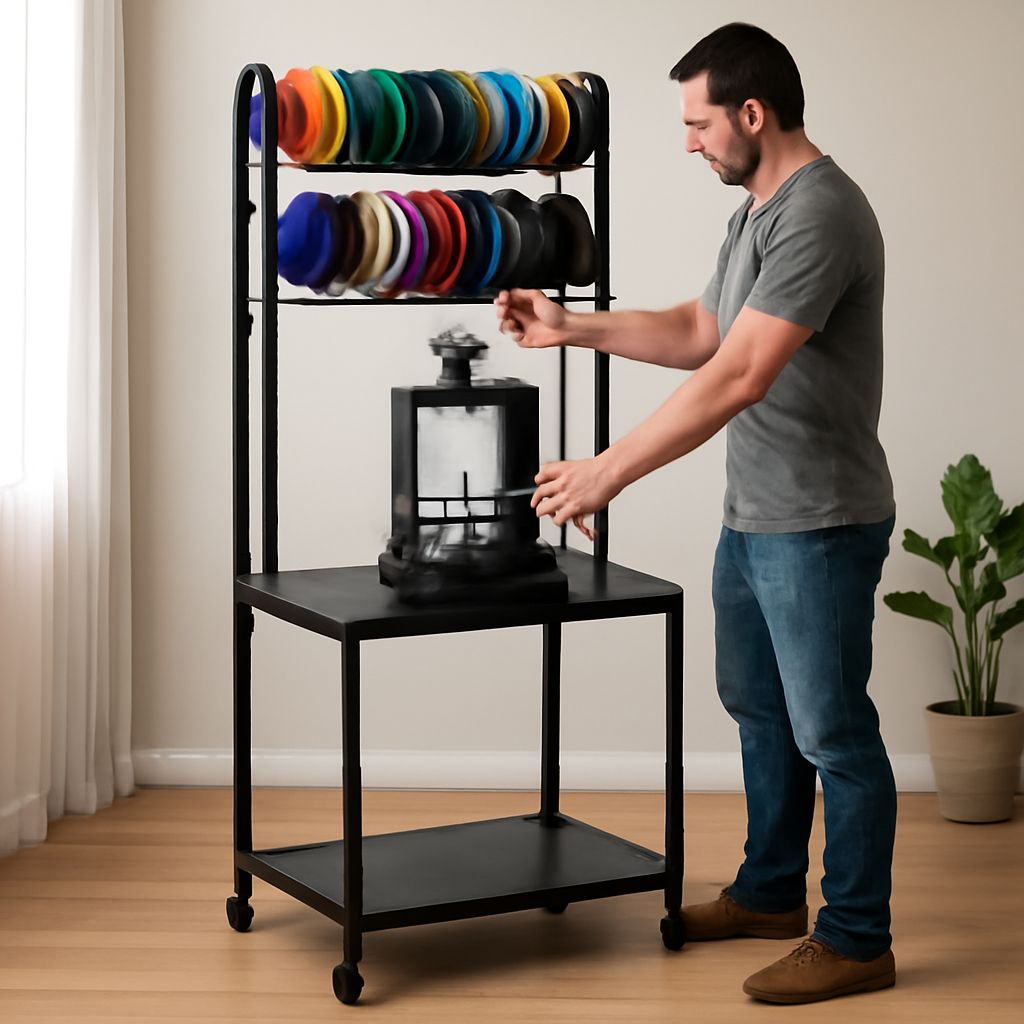
Proper 3d printer filament storage is critical because most filament materials — especially PETG, Nylon, TPU, and PLA — absorb moisture from the air over time. Moisture in filament causes bubbling, stringing, inconsistent extrusion, and surface defects in finished prints. Effective 3D printing filament storage involves:
- Sealed containers or vacuum bags with silica gel desiccant
- Dedicated filament storage boxes like the Polymaker Polybox or eSun eBOX, which include heated drying alongside storage
- Airtight bins from IKEA (SAMLA series) with a hygrometer to monitor humidity
- Target: below 15% relative humidity inside the storage container
Once filament has absorbed moisture, a dedicated 3D printer filament dryer (Sunlu FilaDryer S2, PrintDry Pro) restores it by heating the spool at 45-65°C for several hours, driving moisture out before printing.
3D Printer Filament Recycler: Reducing Waste and Cost
A 3d printer filament recycler — also called a filament extruder or regrinder — processes failed prints, support material, and plastic waste back into usable filament. The Filabot Original and Artme3D Filament Maker are the leading desktop filament recyclers for hobbyists and small shops. Using a 3D printing filament recycler from failed prints involves shredding the plastic, re-extruding it through a heated nozzle at controlled speed, and spooling the resulting filament. The diameter consistency of recycled filament varies and typically doesn’t match commercial filament quality without additional monitoring hardware, but for non-critical prints, a filament recycler for 3D printers dramatically reduces material costs and plastic waste.
3D Printer Gantry: The Motion System Backbone
A 3d printer gantry is the structural framework that carries the print head (and sometimes the build platform) across the X and Y axes. The gantry design fundamentally determines how fast and accurately a printer can move. Common 3D printer gantry designs include:
- Cartesian gantry — Separate X and Y axis movements on independent rails; simple and accurate, but slower
- CoreXY gantry — Both axes driven simultaneously by crossed belts; allows much faster acceleration without moving the print head mass in a single direction
- H-Bot gantry — Similar to CoreXY but with a shared belt; less common due to racking forces
Upgrading the 3D printer gantry with linear rails instead of V-slot wheels dramatically improves print quality at high speeds by reducing flex and backlash in the motion system.
Conductive 3D Printer Filament: Electronics Applications
Conductive 3d printer filament contains carbon black or graphene additives that make the printed material electrically conductive. Applications for conductive 3D printing filament include printing capacitive touch pads, simple circuit traces, antistatic enclosures, and educational electronics demonstrations. The resistance of conductive 3D printer filament is significantly higher than copper wire — typically 1-30 ohms per centimeter — making it suitable for low-current sensing and switching applications rather than high-power circuits. ProtoPasta Conductive PLA and BlackMagic3D Conductive Graphene PLA are the most tested conductive filament options for 3D printers. Note that standard PLA or PETG filament retains residual conductivity if run through a previously used conductive filament nozzle — dedicate a separate nozzle to conductive filament printing.
3D Printer Filament Splicer: Joining Filament Mid-Print
A 3d printer filament splicer joins two pieces of filament end-to-end, enabling color changes, material transitions, or length extension of nearly-finished spools. The Palette 3 and Mosaic Palette are commercial filament splicers for 3D printers that automate multi-material printing by precisely timing filament segments. DIY filament splicing uses a simple heated tube — a short PTFE tube section heated to the filament’s melting point — to weld two filament ends together. The joint quality from a 3D printer filament splicing tool is generally adequate for structural sections of prints but can show at color transition boundaries in decorative prints.
Bottom line: 3d printer filament storage in sealed, desiccant-filled containers is the single most impactful maintenance practice for consistent print quality. A 3d printer filament recycler reduces long-term material costs but requires additional calibration effort. Upgrading to a CoreXY 3d printer gantry design unlocks significantly faster print speeds for users ready to advance beyond entry-level hardware.