Bluetooth Ceiling Speakers: How to Fill Every Room With Wireless Audio
Bluetooth Ceiling Speakers: How to Fill Every Room With Wireless Audio
You want music in the kitchen and hallway without running speaker cables across the floor or cluttering shelves with tower units. Bluetooth ceiling speakers solve both problems by mounting flush into the ceiling and streaming audio wirelessly from your phone. Ceiling bluetooth speakers come in round or square cutouts and disappear into the surface once painted, leaving a clean room aesthetic. If you’re comparing bluetooth in ceiling speakers across brands, you’ll find that most share the same install footprint as passive ceiling speakers, so you can upgrade an existing setup. A single bluetooth ceiling speaker works in a small bathroom; for open-plan living areas, a pair of in ceiling bluetooth speakers placed 6–8 feet apart gives you even coverage.
How Bluetooth Ceiling Speakers Actually Work
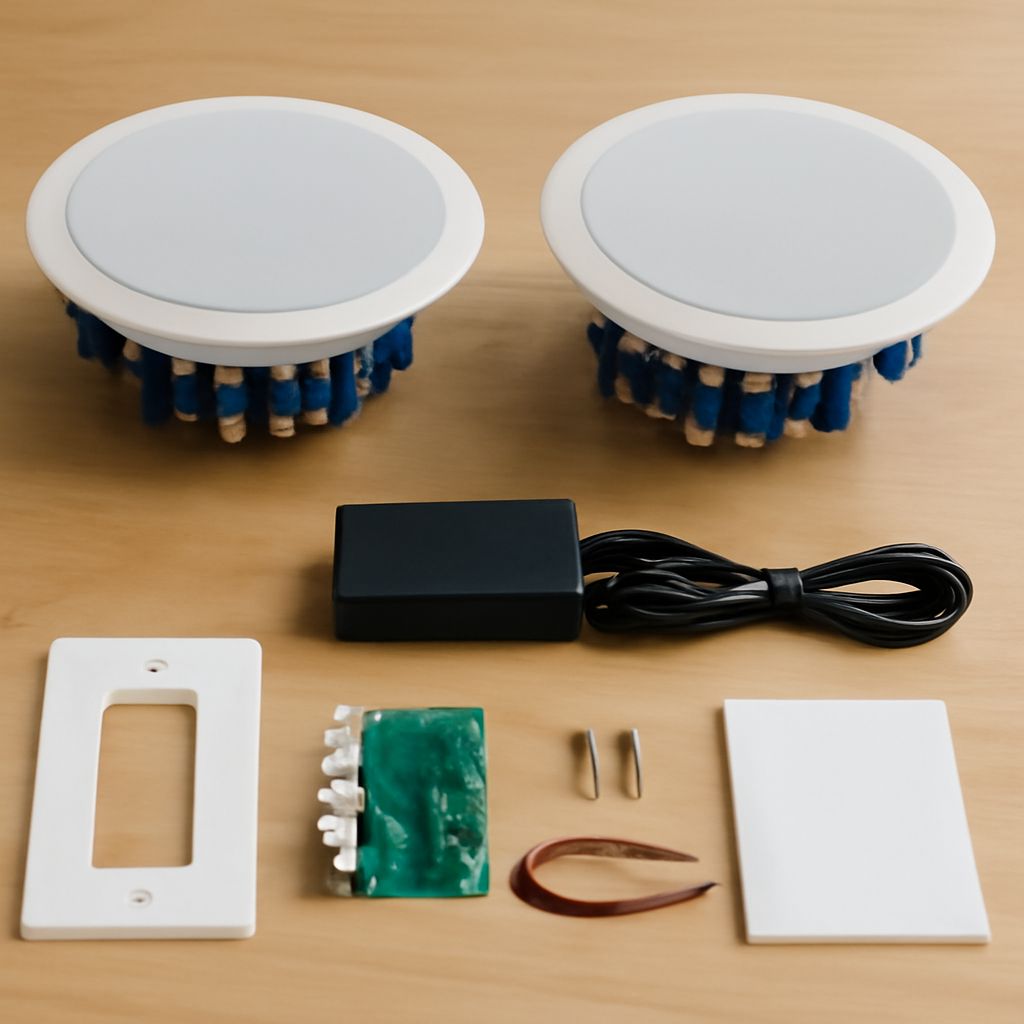
Unlike passive ceiling speakers that need a separate amplifier, wireless flush-mount ceiling speakers contain a built-in amplifier and Bluetooth receiver in the speaker housing itself. You cut a hole to the specified diameter, run a power line (most require 120V AC from a nearby junction box), and pair the speaker with any Bluetooth device within range—typically 30–50 feet through walls. Some ceiling-mounted Bluetooth audio units also accept a 3.5mm or optical input as a backup for sources that don’t transmit wirelessly.
Stereo pairing is available on certain models: two ceiling Bluetooth speakers link together, with one handling the left channel and the other the right. This matters in rooms where you want true stereo separation rather than mono fill.
What to Look for When Comparing In-Ceiling Bluetooth Speakers
Start with driver size. A 6.5-inch woofer in a ceiling-recessed Bluetooth unit produces noticeably more bass than a 5.25-inch driver. For large open rooms, 8-inch drivers are worth the larger cutout. Next, check the tweeter angle—tweeters that pivot or aim let you direct high frequencies toward the listening position rather than straight down at the floor.
Bluetooth version matters for connection stability. Bluetooth 5.0 ceiling audio speakers maintain a cleaner link when walls and furniture sit between the speaker and your phone. Older 4.2 units work but reconnect more often in busy wireless environments. Also look for aptX or AAC codec support if audio quality is a priority; these codecs transmit more audio data than standard SBC, resulting in cleaner playback from compatible phones.
Installing Ceiling-Mounted Bluetooth Speakers: Step-by-Step
Planning the cutout location is the most important step. Use a stud finder to confirm no joists or pipes run through your target spot. Most in-ceiling Bluetooth audio speakers ship with a cardboard or plastic cutout template—trace it on the ceiling before cutting. Standard cutout sizes run 6.25 inches for 5.25-inch drivers and 7.25 inches for 6.5-inch drivers; confirm the spec sheet before you start.
Run your power cable from the nearest junction box before inserting the speaker. Most wireless ceiling speaker units are Class 2 devices and use low-voltage DC power supplies that plug into standard outlets, which simplifies the electrical work. Feed the power cable through the cutout, connect it to the speaker’s terminal, and press the speaker into the hole until its mounting clips expand and grip the drywall. Pair it with your phone, play a test track, and adjust the tweeter angle if the model allows.
Room Placement Tips for Ceiling Bluetooth Speakers
For kitchens, center a single ceiling-flush Bluetooth speaker over the work island or sink area where you spend the most time. In bathrooms, choose a speaker rated at least IPX4 for moisture resistance. Living rooms benefit from two bluetooth ceiling audio units placed one-third of the room’s length from each end wall, which distributes sound evenly across the seating area. Avoid placing speakers directly above televisions—the audio reflects off the screen and creates a distracting echo.
Bottom line: Ceiling-mounted Bluetooth speakers deliver clean wireless audio with minimal visual footprint. Choose driver size based on room volume, verify Bluetooth 5.0 for stable pairing, and plan your power routing before cutting any holes.