Large Format 3D Printer Guide: Big Builds, CoreXY Kits, and More
Large Format 3D Printer Guide: Big Builds, CoreXY Kits, and More
You’ve outgrown your standard 220x220mm print bed. A cosplay armor piece, a custom furniture component, or a full-size prop needs a build volume that a desktop printer simply can’t accommodate. A large format 3d printer changes what’s possible without outsourcing to a print farm or scaling down your designs. But the category covers everything from modified hobbyist machines to industrial systems — knowing what build size actually matters for your use case keeps you from overspending or underbuying.
This guide covers what qualifies as a large format 3d printer, why the best corexy 3d printer designs dominate this segment, how a large format 3d printer kit compares to buying pre-assembled, what a 3d printer 12x12x12 build volume realistically gets you, and assembly considerations for a corexy 3d printer kit build.
What Counts as a Large Format 3D Printer?
Build Volume Benchmarks
There’s no universal cutoff, but printers with a build volume of 300x300mm or larger in X/Y are generally considered large format in the hobbyist segment. The 3d printer 12x12x12 designation refers to a 300x300x300mm build envelope — a significant jump from standard desktop machines. Some large-format machines push into 400x400mm territory or feature tall Z-axis travel (500mm+) for printing tall vases, enclosures, or stacked components. Printers exceeding 500x500mm footprint cross into semi-professional territory, requiring more floor space, stronger frames, and longer print times.
Common Use Cases for Big Printers
Large format printing is common in cosplay and prop making, architecture and product prototyping, large-batch small-part production, and hobbyist projects like full-size RC car bodies or enclosure panels. Size also matters for printing multiple smaller parts simultaneously — a 300mm bed fits significantly more parts per plate than a 220mm bed, reducing per-part time when running batch jobs.
Best CoreXY 3D Printer Designs for Large Builds
Speed and Precision Advantages
A corexy motion system moves the toolhead via two motors driving a crossed belt arrangement. Both motors work together to move the head diagonally, which distributes inertia evenly and allows higher print speeds without the ringing artifacts that bed-slinger designs produce at speed. At large build volumes, the best corexy 3d printer designs handle fast moves without losing dimensional accuracy — an important advantage when printing larger parts where dimensional drift compounds over long print times.
Popular CoreXY Machines
The Voron 2.4 in 350mm configuration, the Bambu Lab X1C with its 256x256x256mm volume, and the RatRig V-Core series are among the most-discussed large-format CoreXY options. For the largest hobbyist builds, the Voron Trident 350 and V-Core 3 at 400mm are common choices. These machines require an enclosure to print warping-prone materials reliably — a consideration that adds cost and space to any large-format setup.
Large Format 3D Printer Kit: DIY vs. Pre-Built
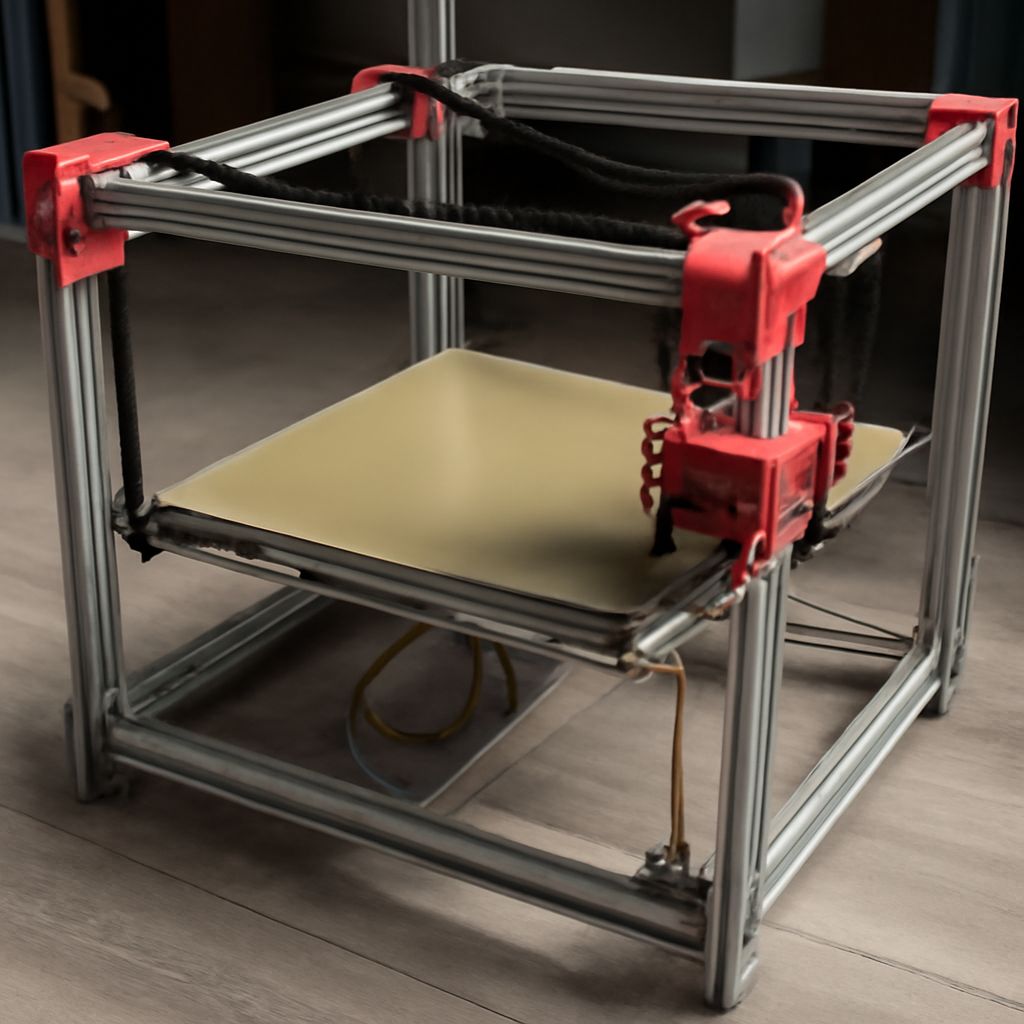
A large format 3d printer kit gives you better value per dollar of build volume but requires significant assembly time and mechanical knowledge. Voron kits sourced through vendors like LDO or Formbot take 20–40 hours to assemble and commission for an experienced builder; less experienced builders may spend considerably more. Pre-built large-format printers from Bambu, Creality (K1 Max), and Qidi reduce setup time dramatically but cost more for equivalent build volume. Kit builds also allow customization — you choose frame materials, electronics, and hotend upgrades — which appeals to users who want to tune performance beyond factory defaults.
3D Printer 12x12x12 Build Volume: What You Can Actually Print
A 3d printer 12x12x12 envelope (approximately 300x300x300mm) accommodates objects like a standard motorcycle helmet shell in two parts, full-size RC car body panels, large lamp bases, and most cosplay chest armor sections. At this volume, print times for solid or high-infill objects extend to 12–30+ hours, making material choice and temperature stability more important. Large flat parts benefit significantly from an enclosure — temperature variation across a 300mm surface can cause warping even with PLA, and ABS or ASA without an enclosure at this scale is nearly impossible to print reliably.
CoreXY 3D Printer Kit Assembly Tips
When building a corexy 3d printer kit, frame squareness is the most important first step — measure diagonals and correct before tightening any extrusion joints. Belt tension must be equal on both A and B axes; unequal tension creates diagonal artifacts in prints. Use a quality multimeter to verify all wiring before powering on. First-layer calibration on a large bed requires bed mesh leveling with 5×5 or 7×7 probe points to compensate for surface variation across the full area. Budget extra time for PID tuning the hotend and bed separately — large heated beds take longer to stabilize and require different PID constants than standard machines.
Bottom Line
A large format 3d printer is worth the investment when your projects consistently hit the limits of standard bed sizes. CoreXY designs offer the best combination of speed and accuracy at scale. Kit builds maximize value if you’re willing to invest assembly time; pre-built machines are the right call if you need to start printing quickly.