Wide Format Sublimation Printer: From Basic Printers to DTG and Specialty Printing
You’ve outgrown desktop sublimation printing and need to expand to larger format work, or you’re researching options for a custom apparel business and trying to understand where a wide format sublimation printer fits compared to DTG printing. The specialty print market covers a range of technologies, and choosing the wrong one for your application costs both money and time.
Understanding the difference between a basic printer modified for sublimation, a purpose-built wide format sublimation printer, a used wide format printer, a used dtg printer, and a diy dtg printer built from scratch helps you make the right investment. Each path has different upfront costs, ongoing consumable expenses, and output capabilities that determine which is right for your workflow.
What a Wide Format Sublimation Printer Does
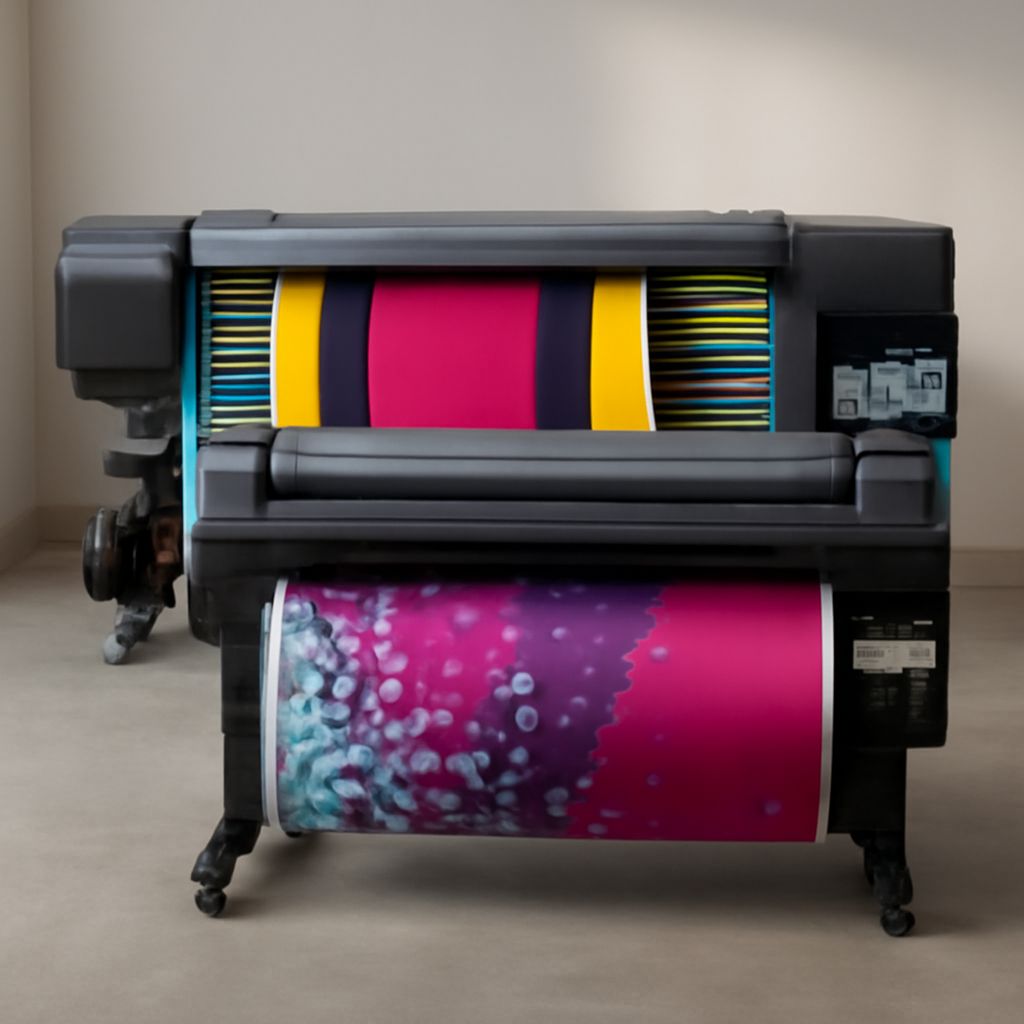
Sublimation printing uses heat to transfer dye directly into polyester fabric or polymer-coated hard substrates. A wide format sublimation printer handles outputs wider than 24 inches, typically ranging from 44 inches to 126 inches wide. These machines are used for banners, soft signage, flags, sportswear, swimwear, and large format textile printing.
The print head deposits sublimation ink onto transfer paper. That paper is then heat-pressed against the substrate, where heat causes the ink to convert directly from solid to gas, bonding with the polyester molecules. The result is a print that’s part of the material rather than sitting on its surface. Colors stay vibrant through washing and don’t crack or peel.
Wide format sublimation works only on polyester (or polyester-blend) fabrics and polymer-coated hard goods. It won’t work directly on cotton, which is where DTG printing has a distinct advantage.
Piezo Inkjet Technology Behind Sublimation Printers
Most wide format sublimation printers use piezoelectric inkjet print heads rather than thermal inkjet heads. Piezo heads use electrical current to flex a crystal element, which pushes ink droplets through tiny nozzles. This mechanism handles the thick viscosity of sublimation inks better than thermal heads and allows precise droplet size control for accurate color reproduction.
Epson’s PrecisionCore and Ricoh’s Gen 5 print heads are the dominant technologies found in wide format sublimation hardware from brands like Epson SureColor, Sawgrass, and many rebranded Chinese OEM machines. The Epson SC-F series is considered a benchmark for quality and color accuracy in this category.
Basic Printer Conversion vs. Purpose-Built Wide Format
A basic printer converted to sublimation work typically means a desktop inkjet with sublimation ink loaded in place of standard ink. Small-format Epson EcoTank or Sawgrass desktop units can produce output up to 8.5×14 inches. These work for mugs, small tiles, and shirt front designs but can’t handle yardage or wide textile printing.
A purpose-built wide format sublimation printer is a completely different machine class. These units include:
- A media feed system designed for roll-to-roll textile or paper handling
- Multiple ink channels (typically CMYK plus light cyan and light magenta for wide color gamut)
- An automatic maintenance station that keeps heads primed during idle periods
- RIP software integration for accurate color management across substrate types
The minimum investment for a new entry-level wide format sublimation machine starts around $5,000 to $8,000. High-production units from Mimaki or Roland reach $30,000 and above.
Used Wide Format Printer: Buying Considerations
A used wide format printer can cut upfront costs by 40 to 70 percent compared to new equipment. The risks are head condition, total print volume (measured in linear meters or square feet), and the availability of replacement parts and service support.
Before buying a used wide format printer, request a nozzle check print showing all channels firing cleanly. Ask for the machine’s print counter reading. Machines with over 1 million square feet of output have significantly more wear on the carriage belt, platen, and feed rollers. Confirm that the specific model still has manufacturer support and consumable availability, since discontinued models can become expensive to maintain.
Used DTG Printer and DIY DTG: Direct-to-Garment Alternatives
A used dtg printer prints directly onto fabric using water-based pigment inks, making it possible to print on 100% cotton and dark garments with a white underbase layer. Popular DTG machines include the Epson F2100, the Brother GTX Pro, and the Kornit series for high production environments.
Buying a used dtg printer means inheriting the machine’s maintenance history. DTG heads are sensitive to clogging if the machine sits idle without proper flushing. Ask for maintenance records, a current nozzle check, and confirm that the white ink circulation system is functional before purchasing.
A diy dtg printer is a conversion project using a flatbed inkjet modified with textile-grade inks and a platen attachment. Several community forums document successful conversions of Epson desktop models for small-scale cotton printing. Results vary widely depending on the quality of the pretreatment solution used on the garment before printing, and output quality rarely matches a purpose-built DTG machine.
Bottom line: Wide format sublimation is the most cost-effective path for high-volume polyester textile and soft signage work. DTG fills the cotton and dark-garment gap that sublimation can’t address. Match the technology to your substrate mix before committing to either used or new equipment.