Directional WiFi Antenna Guide: High Gain and High Power Options for Better Range
Your router sits in one corner of the property and you need reliable signal in a building 200 feet away. A directional wifi antenna solves this by focusing all transmission energy into a narrow beam aimed at your target, rather than radiating equally in all directions. A high gain wifi antenna makes that beam even more powerful, giving you the equivalent of turning up the volume while pointing it directly where you need it. A directional antenna wifi setup works best when you know exactly where your client device is and can aim accordingly. Adding a wifi external antenna to a router or access point is often a simple upgrade that requires only unscrewing the existing omnidirectional antenna. And for long-distance outdoor links, a high power wifi antenna with 15 dBi or higher gain can span hundreds of meters with clear line of sight.
Here is what you need to know about directional antenna types, gain ratings, and real-world installation for extended Wi-Fi range.
Directional vs. Omnidirectional Antennas
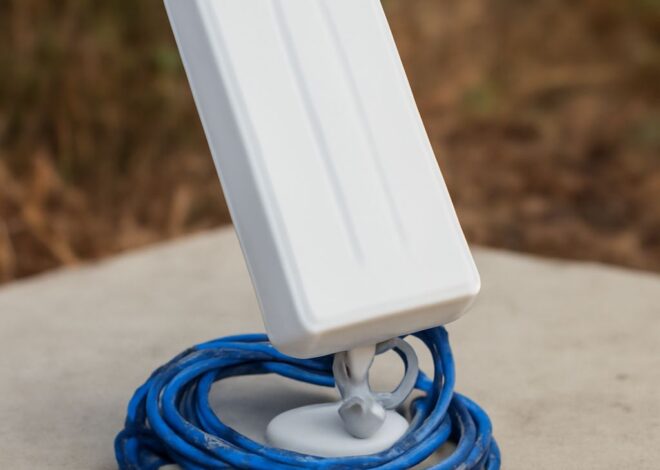
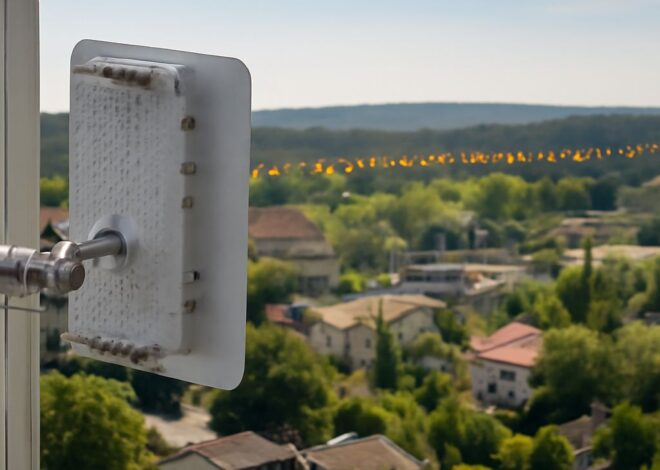
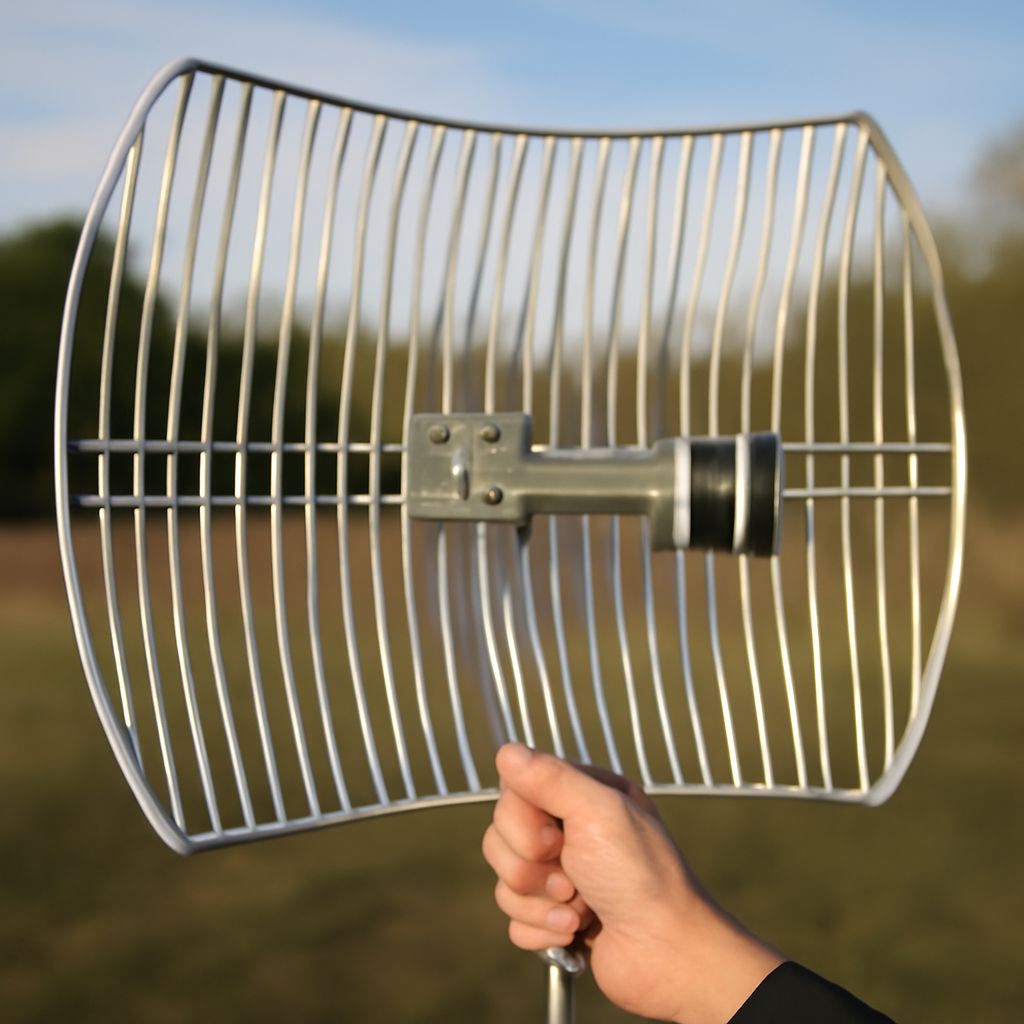
Omnidirectional antennas — the type that ships with most consumer routers — radiate signal in a 360-degree pattern, prioritizing coverage area over distance. A directional WiFi antenna trades that wide coverage for focused range. Think of the difference between a floodlight and a spotlight. A yagi antenna focuses a narrow beam over long distances, ideal for point-to-point links across open space. A patch antenna offers a moderate beam width suitable for covering a specific room or building section. A parabolic dish antenna achieves the highest gain of any consumer option, used for links over several kilometers with a clear line of sight.
Understanding Antenna Gain and dBi
Gain is measured in dBi (decibels relative to an isotropic radiator). A standard router antenna runs 2–5 dBi. A high gain WiFi antenna for directional use typically runs 9–24 dBi. Each 3 dBi increase roughly doubles the effective power in the focused direction. High gain numbers are attractive but come with a narrower beam — a 24 dBi antenna may have only a 10–15 degree beam width, requiring precise aiming. For indoor applications or point-to-multipoint setups, moderate gain (9–12 dBi) patch antennas offer a better balance of coverage and distance than extreme-gain yagis.
Choosing an External WiFi Antenna for Your Setup
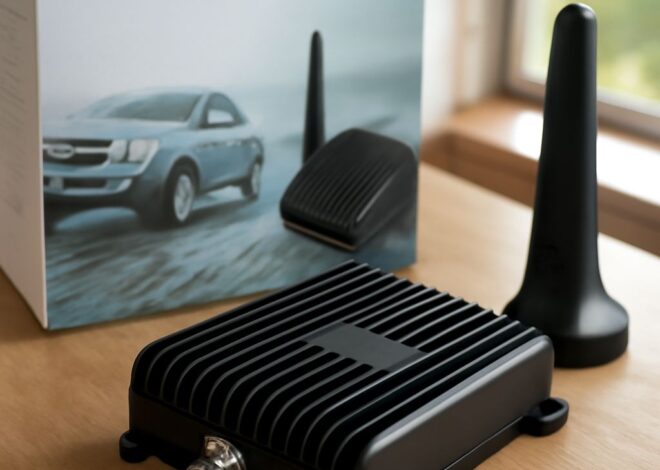
Before buying a wifi external antenna, check your router’s connector type. RP-SMA is the most common connector on consumer routers. Some access points use N-type connectors. The gain upgrade is pointless if the antenna doesn’t mate correctly. Also confirm the antenna covers your frequency band. Dual-band routers use both 2.4 GHz and 5 GHz. A 5 GHz antenna will not work at 2.4 GHz and vice versa unless explicitly rated for both. Check the antenna’s frequency specification before purchasing.
Long-Distance Outdoor Installations
Outdoor point-to-point links between buildings require mounting both a transmitting and receiving antenna on stable mounts aimed at each other. Clear line of sight is mandatory — obstructions cut signal dramatically at 5 GHz. Use weatherproof N-type connectors and gel-filled connectors on outdoor cable runs to prevent water ingress. Keep coaxial cable runs as short as possible since signal loss increases with cable length. For links over 100 meters, consider an outdoor access point with an integrated directional antenna rather than connecting an external antenna to an indoor router via a long cable run.
Legal Considerations for High-Power Antennas
Transmit power and antenna gain are regulated in most countries. In the US, the FCC limits Effective Isotropic Radiated Power (EIRP) for unlicensed 2.4 GHz and 5 GHz devices. Adding a very high gain antenna to a router set at maximum transmit power may exceed legal limits. Check your router’s documentation for power reduction guidance when using high-gain antennas, and stay within EIRP limits to avoid regulatory issues.
A directional high-gain WiFi antenna installation requires clear line of sight, correct connector matching, and proper aiming for best results. Take time to align antennas carefully and test signal strength at both ends before finalizing mounts.