Best Bluetooth Car Adapter for Wireless Audio and Hands-Free Calls
Your car’s stereo predates Bluetooth by a decade, and you’re tired of relying on an aux cable that crackles every time someone shifts in the passenger seat. The best bluetooth car adapter lets you stream music and take calls wirelessly without replacing the whole head unit. A bluetooth adapter for car installation takes five minutes and gives you a wireless connection that works with every phone your passengers carry. A quality bluetooth car stereo adapter passes audio through the FM transmitter or aux input, depending on the model, with sound quality that ranges from acceptable to genuinely good. A bluetooth adaptor for car with microphone support handles hands-free calling so you can stay compliant with local phone laws while driving. And a solid bluetooth connection for car that pairs reliably every time you get in eliminates the fumbling with cables that defined pre-wireless commutes.
Here is what matters when choosing a Bluetooth adapter for your car and which connection types deliver the best results.
Types of Bluetooth Car Adapters
FM Transmitter Adapters
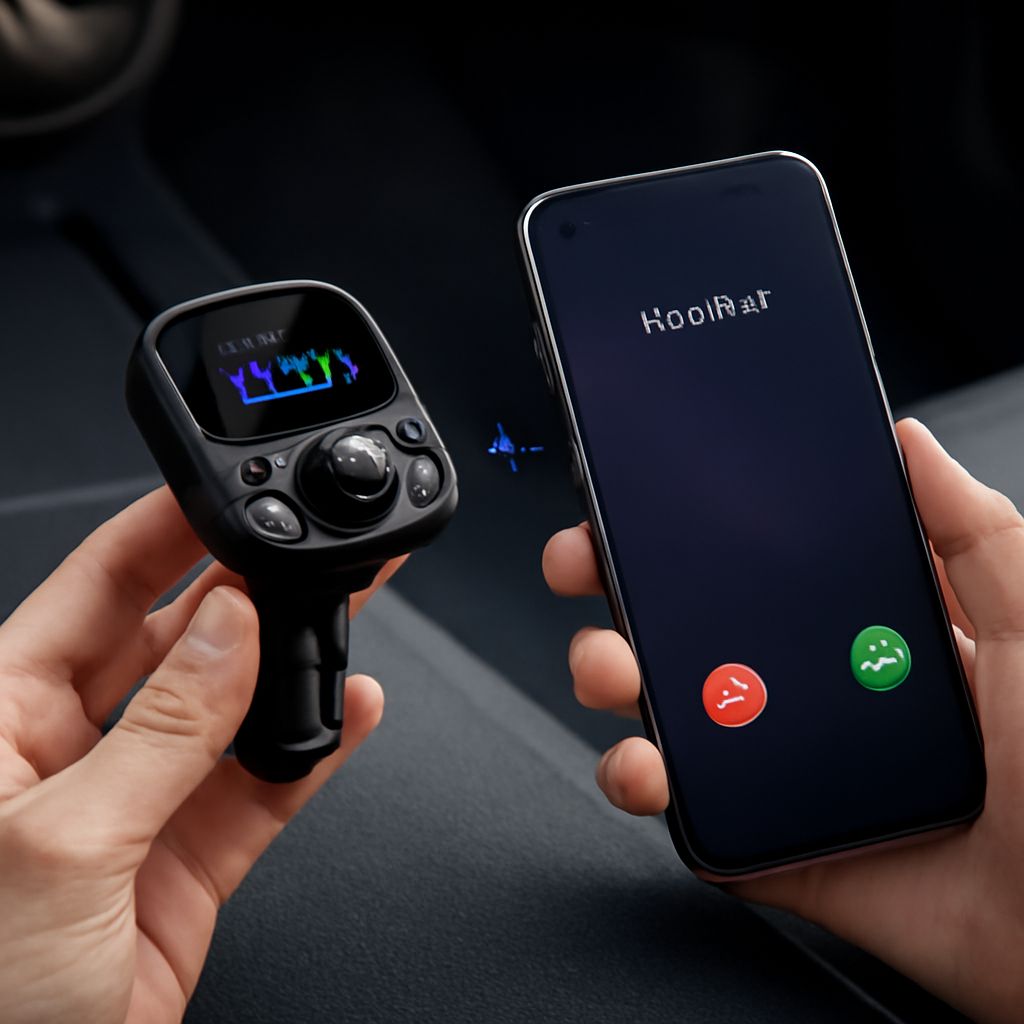
FM transmitter-style Bluetooth adapters plug into your car’s 12V cigarette lighter port and broadcast audio on an FM frequency that your car radio picks up. No wiring required beyond the power plug. Audio quality depends heavily on finding a clear FM frequency — crowded urban areas with many stations can make this method sound mediocre. Best suited for older vehicles with no aux input.
Aux Input Adapters
If your car has a 3.5mm aux input, a Bluetooth adapter that pairs wirelessly with your phone and outputs audio through a short aux cable delivers noticeably better sound than FM transmission. The audio chain from Bluetooth to DAC to aux is shorter and cleaner. Some adapters clip to the sun visor and combine a microphone for calls with aux audio output.
OBD and USB Port Adapters
Some modern Bluetooth car adapters plug into the USB port of newer vehicles and integrate with the car’s infotainment system more directly. These tend to be more stable and may support features like automatic reconnection when you start the car.
Sound Quality Considerations
Bluetooth audio codecs affect sound quality. Standard SBC is the minimum baseline. aptX and aptX HD deliver better fidelity if both the adapter and your phone support them. AAC works well for iPhone users. When comparing adapters, check the supported codec list — a car Bluetooth audio adapter that only supports SBC will sound noticeably compressed on a good car audio system.
Microphone Quality for Hands-Free Calls
A Bluetooth car adapter with a built-in microphone handles hands-free calling, but microphone placement and noise cancellation vary widely. Adapters that clip near the driver’s mouth rather than sitting in a dashboard port produce clearer calls. Look for dual-microphone designs with wind noise filtering for consistent call quality at highway speeds.
Range, Battery, and Connectivity
Most car Bluetooth adapters draw power from the 12V port or a USB port, so battery life is a non-issue as long as the car is running. Bluetooth 5.0 provides more stable connections and faster pairing than older versions. Look for adapters that remember multiple paired devices and automatically reconnect to the last connected phone when powered on — this matters when multiple family members use the same car.
Top Picks by Use Case
For pure audio quality via aux: Anker Soundsync or Mpow BH298A. For FM transmission in rural areas: Nulaxy KM18. For hands-free calling priority: Jabra Drive or Plantronics Voyager series. For newest vehicles with USB integration: CarlinKit or similar CarPlay adapter if your car supports the interface.
Key takeaways: Match the adapter type to your car’s available inputs — aux delivers better audio than FM in most cases. Prioritize aptX or AAC codec support for better music quality. Check microphone placement before buying if hands-free calling is your main use case.