Inkjet vs Laser Printer: Which One Is Right for You?
Inkjet vs Laser Printer: Which One Is Right for You?
You are standing in a store — or scrolling through a product page — trying to decide between two very different machines. The inkjet vs laser printer debate comes down to what you print, how often you print it, and how much you want to spend on supplies over the next three years. Both types work, both have loyal users, and both have real weaknesses. This guide cuts through the marketing language to give you a direct comparison.
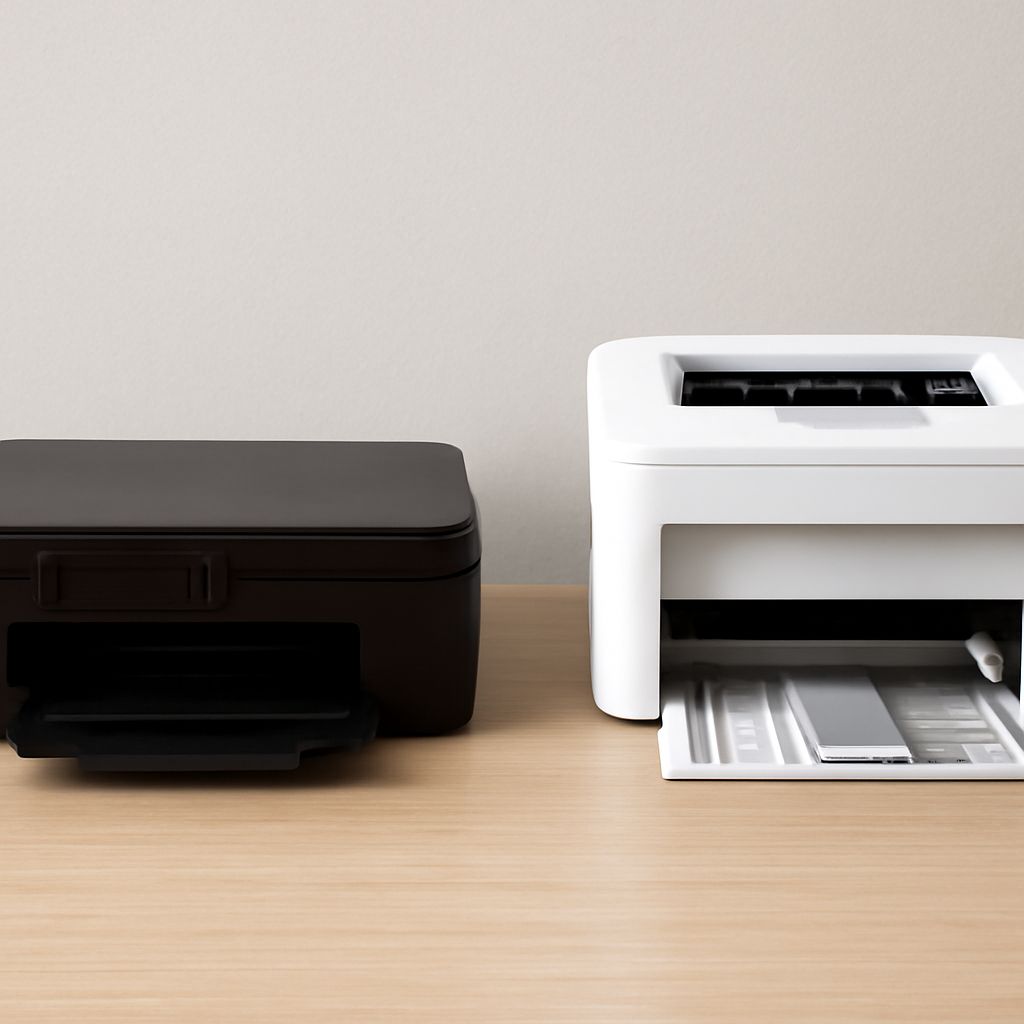
The laser printer vs inkjet question is not new, but the options in each category have changed significantly in the last few years. If the last time you bought a printer was a decade ago, prices and performance have shifted enough that your old assumptions may not hold. Whether you are deciding between inkjet or laser printer for a home office or a small business, the comparison that matters is total cost of ownership combined with the types of documents you produce most often. A comparison of ink jet vs laser printer costs alone misses half the picture.
How Inkjet and Laser Printers Work
Inkjet printers spray tiny droplets of liquid ink through microscopic nozzles onto paper. The print heads move back and forth across the page, depositing color with high precision. This process works well for photos and color graphics because the dots blend smoothly and the color gamut is wide. Laser printers work completely differently: a laser beam draws the image onto a charged drum, which picks up dry toner powder and transfers it to paper, where heat fuses it permanently. Toner is a dry powder, not a liquid, which means it does not smear, does not require warm-up time to dry, and produces sharp, consistent text at any speed.
Print Quality: Inkjet vs Laser
For photographs and graphics with smooth gradients, inkjet wins. Photo-grade inkjet machines at 4800 DPI produce gallery-quality prints that laser machines cannot match. For text documents and charts, laser is the better choice. Laser-printed text is crisp at any font size, does not smear when wet, and looks identical on sheet 1 and sheet 500. Color laser printers have improved significantly, but they still struggle with smooth photo gradients compared to a dedicated photo inkjet. If your primary output is black text on white paper, laser is more consistent. If you print photos or marketing materials regularly, inkjet handles color better.
Cost Comparison: Ink Jet vs Laser Printer
The purchase price of an ink jet vs laser printer is often similar at the entry level — both start around $100–$150. Where they diverge is in ongoing supply costs. Inkjet cartridges cost $15–$40 each and print 200–400 pages per cartridge for standard documents. That works out to roughly $0.05–$0.15 per black-and-white page. Laser toner cartridges cost $30–$80 but print 1,500–3,000 pages. Cost per page for laser typically runs $0.02–$0.05. For users who print over 200 pages per month, laser is significantly cheaper to operate. Inkjet users who print occasionally also face another cost: ink drying and head clogging when the machine sits unused for weeks.
Which Printer Type Fits Your Use Case?
Choose inkjet if: you print photos at home, you print fewer than 50 pages per month, or you need color output that looks good on glossy paper. Choose laser if: you print primarily text documents, you print more than 100 pages per month, you share the printer with multiple users, or you need output that does not smear when handled. For a home office with mixed needs, a mid-range color laser is usually the more practical long-term investment. For someone who wants to print family photos at home without sending them to a lab, a photo inkjet is the better fit. There is no universal answer — the right choice depends on your actual printing habits, not the average user’s habits.
Pro Tips Recap
If you go with inkjet, print at least one page per week to keep the heads from clogging. If you go with laser, check the drum life separately from the toner life — some entry-level models bundle them, others charge for drum replacement separately. For any printer, calculate the cost per page before buying, not just the device price.