Wall Mounted Bluetooth Speakers: Clean Audio Without the Clutter
Wall Mounted Bluetooth Speakers: Clean Audio Without the Clutter
You want music in the garage, patio, or kitchen but floor space is already maxed out. Wall mounted bluetooth speakers put audio exactly where you need it without stands, shelves, or floor footprint. Bluetooth in wall speakers go one step further—they sit flush inside the drywall, leaving only a grille visible, for the cleanest possible installation. Active bluetooth wall speakers have built-in amplifiers and wireless receivers, so a power line is all you need to run to the wall. If you prefer a surface-mount approach, wall mount bluetooth speakers attach to any flat surface with included brackets and blend into most room styles with modern enclosure designs. A single in wall bluetooth speaker can cover a small room; for larger spaces or true stereo, two units paired together give you left-right separation without any visible wiring.
Surface-Mount vs. In-Wall Bluetooth Speakers
Surface-Mount Bluetooth Wall Speakers
Surface-mount Bluetooth wall-mounted audio units attach to drywall, concrete, or wood with screws and a keyhole bracket. Installation takes under 15 minutes and requires no drywall cutting—you drill a small hole for the power cable and mount the bracket to a stud or use drywall anchors. These speakers project outward from the wall by 3–5 inches, making them visible but also easier to aim at the listening area. Many outdoor-rated surface-mount bluetooth wall-mounted speakers carry IPX5 or higher ratings for rain and humidity, making them suitable for patios, garages, and covered porches.
In-Wall Bluetooth Speakers
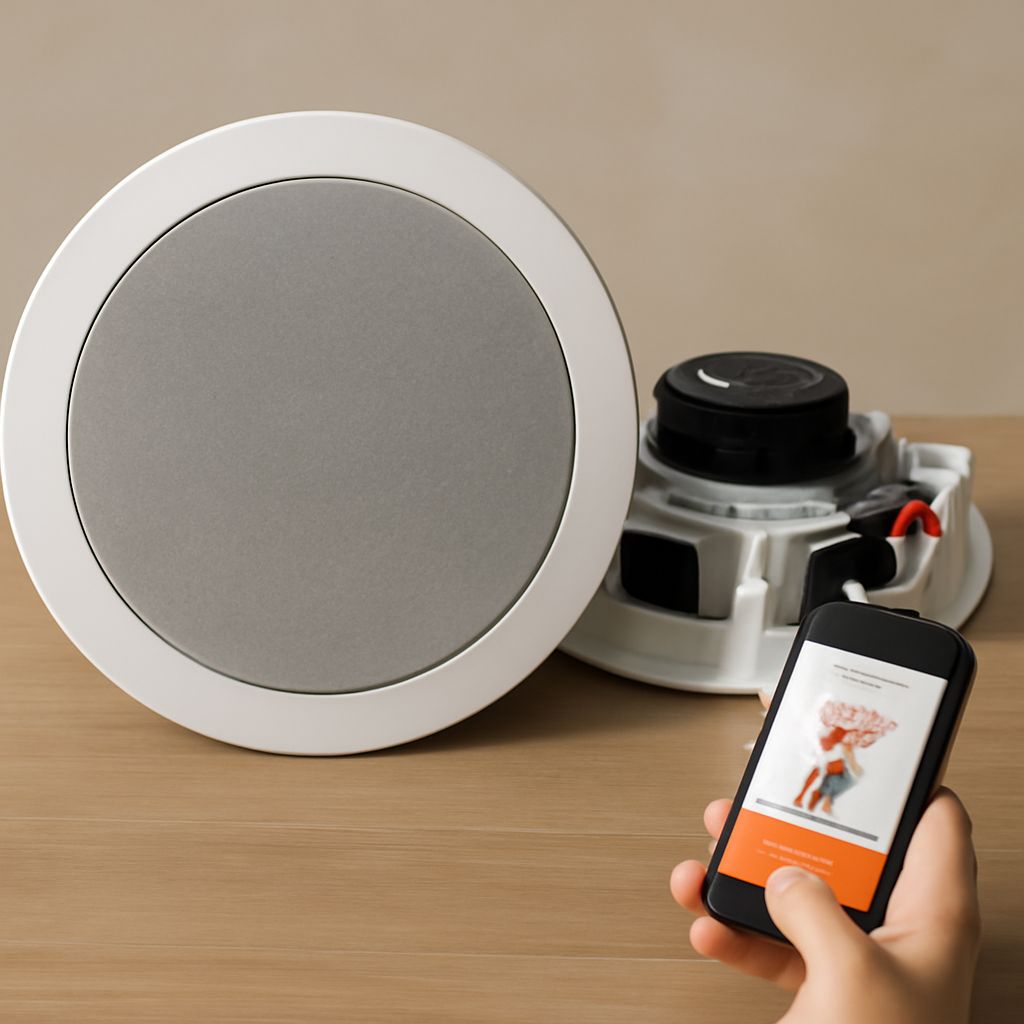
In-wall Bluetooth audio units sit inside the drywall cavity, flush with the wall surface. They require a cutout for the speaker diameter and a power cable run through the wall—more invasive than surface mounting but completely invisible when finished. Passive in-wall Bluetooth systems use a separate wireless amplifier that hides in a closet or cabinet; active in-wall Bluetooth speaker units contain the electronics inside the speaker housing itself. Active units simplify installation by eliminating the separate amp, but passive systems offer easier component upgrades over time.
Key Features to Look for in Bluetooth Wall Speakers
Bluetooth version matters for connection stability—Bluetooth 5.0 or higher in a wall-mounted Bluetooth audio unit provides a more reliable link through walls than older 4.2 specifications. Check the supported codecs: aptX or AAC codec support produces noticeably better audio quality than SBC alone, especially for streaming from iPhones or Android phones at higher bitrates.
Speaker driver size directly affects bass output. A 4-inch driver in a wall-mount Bluetooth speaker produces minimal low end; a 6.5-inch or 8-inch driver in the same form factor delivers real bass extension. Pairing a subwoofer with wall-mounted Bluetooth satellite speakers solves this in rooms where bass is important, like home theaters and music studios.
Input flexibility adds value: some Bluetooth wall speakers include a 3.5mm or RCA input as a backup for devices that don’t transmit wirelessly or for scenarios where the host Bluetooth device is too far away for a reliable link.
Installation Tips for Wall-Mounted Bluetooth Speakers
Always mount to a stud when possible—a 6.5-inch in-wall Bluetooth speaker weighs 4–7 pounds, which can pull drywall anchors loose over time. Use a stud finder and plan the cutout location around stud spacing (typically 16 inches on center). Run a power cable to the nearest outlet before cutting the final speaker hole—once the speaker is installed, fishing cable becomes much harder. For outdoor installations, seal the speaker’s rear cavity with expanding foam insulation to prevent moisture intrusion through the wall cavity from outside air.
Next steps: Measure your listening area and pick a driver size accordingly—6.5-inch drivers for rooms under 300 sq ft, 8-inch for larger spaces. Decide between surface-mount and in-wall based on whether you’re willing to cut drywall. Confirm Bluetooth 5.0 and aptX or AAC codec support before purchasing, and plan your power cable route before ordering to avoid installation surprises.