What Can You Make With a 3D Printer? Ideas, Projects, and Real Applications
What Can You Make With a 3D Printer? Projects, Ideas, and Applications
You just bought or are considering a 3D printer and you keep asking yourself what can you actually do with it beyond printing tiny Yoda figurines. The answer turns out to be more practical and varied than most beginners expect. What can you do with a 3d printer ranges from household repairs and custom parts to professional prototypes and educational tools. Once you understand what can i do with a 3d printer beyond hobbyist projects, the machine starts looking like a genuine workshop tool rather than a toy. The range of what can be made with a 3d printer has expanded as materials have improved, covering everything from flexible phone cases to rigid structural components. And the things to do with a 3d printer that provide the most value tend to be the ones that replace items you’d otherwise buy or wait weeks to receive.
This guide covers the most practical and rewarding 3D printing project categories, from home repairs to advanced applications.
Household Repairs and Replacement Parts
Fixing Broken Items
One of the most immediately useful things you can do with a 3D printer is replace broken plastic parts. Appliance knobs, drawer handles, shelf clips, hinge pins, and cable organizers all print quickly and fit perfectly when you model them to match the original. Sites like Thingiverse and Printables host thousands of pre-made models for common household repairs, meaning you often don’t need to design anything from scratch.
Custom Organization and Storage
Cable management, desk organizers, drawer dividers, and kitchen utensil holders are all practical 3D printing projects. When standard organizers don’t fit your space, printing a custom one takes an hour of design and a few hours of print time. This is one area where 3D printing clearly beats buying: you get exactly the dimensions you need.
Functional Parts and Tools
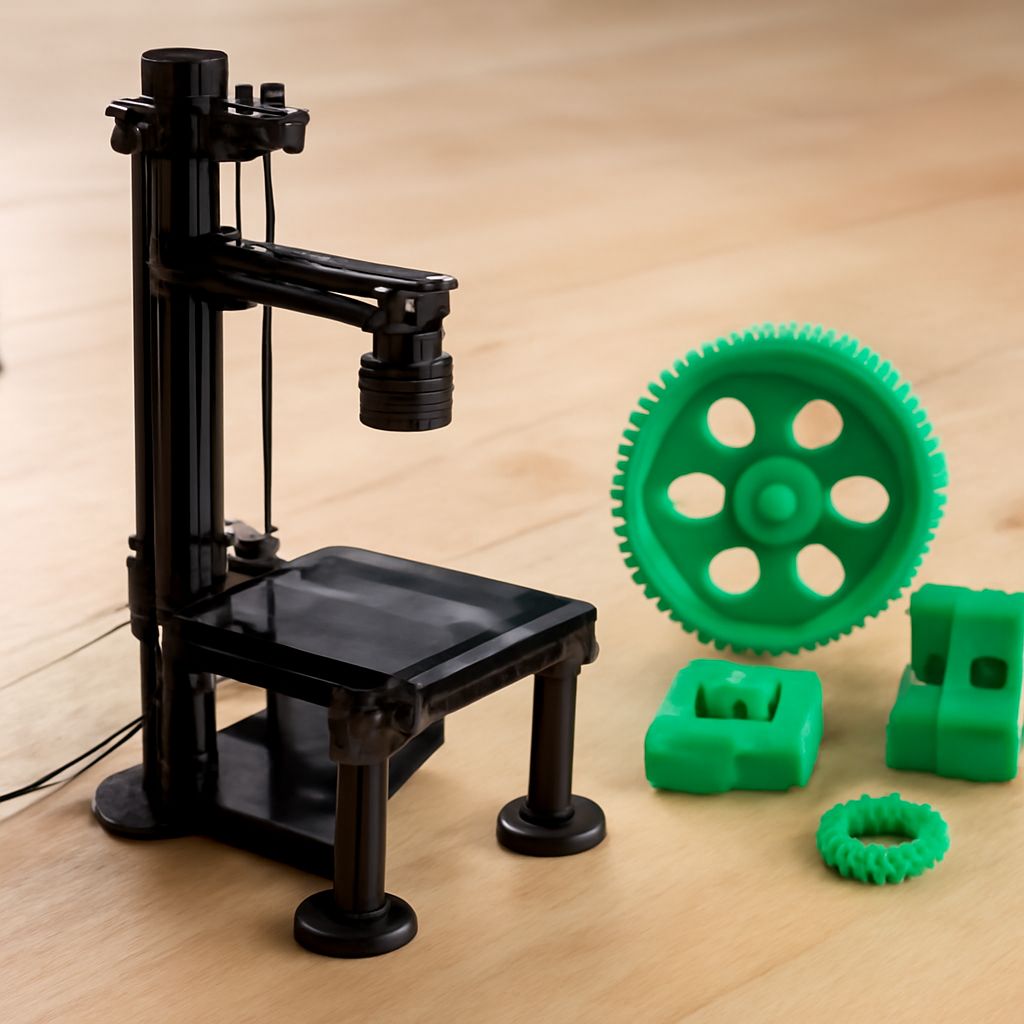
Things made with a 3D printer that actually work in practical settings include jigs and fixtures for woodworking, custom drill guides, mounting brackets for cameras and lights, pipe hangers, and weather sensor enclosures. Printers running PETG or ASA can produce parts that tolerate heat, UV exposure, and moderate mechanical stress. Nylon and TPU add flexibility and impact resistance for applications where PLA would crack.
Hobby and Creative Projects
Cosplay armor and props, miniature terrain for tabletop games, scale models for architecture students, and custom jewelry pieces are all popular categories. The 3D printing community has built a massive library of printable models, and many creators share files for free. Resin printers produce exceptionally fine detail for miniatures and jewelry, while FDM printers handle larger, structural pieces more efficiently.
Educational and STEM Applications
Teachers and homeschoolers use 3D printers to produce anatomical models, geometric shapes, historical artifacts, and science demonstrations. Students learn CAD software while designing objects they can actually hold. Schools with printer access report higher engagement in STEM subjects when students can move from digital model to physical object in a single class period.
Professional and Business Use
Product designers use 3D printers for rapid prototyping — producing physical mockups of new products for client presentations and functional testing. Architects print scale building models. Dentists and orthodontists print dental models and aligners. Custom enclosures for electronics projects eliminate the need to buy generic project boxes that never quite fit. A 3D printer in a small business can prototype, customize, and repair faster than any outside vendor.
Pro tips recap: Start with household repairs and organizational projects — they provide immediate, practical value and build your skills without wasted material. Once comfortable with your machine and slicer software, move into functional parts and custom tools that replace things you’d otherwise buy. The real return on a 3D printer comes from solving specific problems that generic products can’t address.