Bluetooth Intercom Guide: Systems, Headsets, and Motorcycle Headset Reviews
Bluetooth Intercom Guide: Systems, Communicators, and Headset Reviews
You ride with a group and shouting over engine noise to coordinate stops stopped working around the second roundabout. A bluetooth intercom changes group riding entirely, letting everyone communicate hands-free at highway speeds. A bluetooth intercom system handles multiple riders simultaneously, maintaining clear audio even when the group spreads across a quarter-mile stretch of road. A bluetooth communicator designed for helmets needs to survive vibration, wind, rain, and cold temperatures while delivering intelligible voice quality. The bluetooth intercom headset market has expanded to include both budget-friendly entry-level options and premium systems with features borrowed from professional radio communication. And for anyone shopping blind, reading motorcycle bluetooth headset reviews from real riders who’ve tested units across seasons and conditions saves considerable money and frustration.
Here is what separates good Bluetooth intercom systems from the ones that get returned after the first group ride.
How Bluetooth Intercom Technology Works
Bluetooth intercom systems use the standard Bluetooth protocol, extended with proprietary mesh or star-topology networking for multi-rider communication. Traditional intercom uses a daisy-chain approach where each rider connects to the next, limiting the group to a line of paired devices. Mesh networking, used in Cardo’s PackTalk series, allows any rider to communicate with any other rider in the mesh without requiring adjacent pairing. This makes mesh systems more resilient when the group separates or when riders at the front and back of a long group need direct communication.
Key Specifications to Compare
When reading through Bluetooth headset reviews for motorcycle use, focus on these specs:
- Intercom range: Manufacturer claims vary from 400m to 2km in open terrain; real-world range is typically 50–70% of the stated maximum in normal riding conditions
- Number of simultaneous users: Most entry systems handle 2 riders; premium systems handle 4–8 or more
- Battery life: 10–20 hours of mixed music and intercom use is the practical target for full-day rides
- Noise cancellation: DSP-based wind noise reduction is critical above 60 mph for intelligible communication
- Waterproofing: IP67 or better for year-round riding in variable weather
Brand Comparison: Sena vs. Cardo vs. Midland
Sena dominates North American sales with a wide range from budget 3S units to premium 50S and 50C models. Cardo leads in Europe and differentiates through mesh networking technology. The Cardo PackTalk Bold and Edge are the strongest mesh intercom options available. Midland offers a competitive BT X4 Pro with solid intercom range and good value against Sena’s mid-tier. Fodsports and Lexin produce budget systems under $60 that work adequately for casual pairs but lack the range and audio quality of premium brands.
Installation and Helmet Compatibility
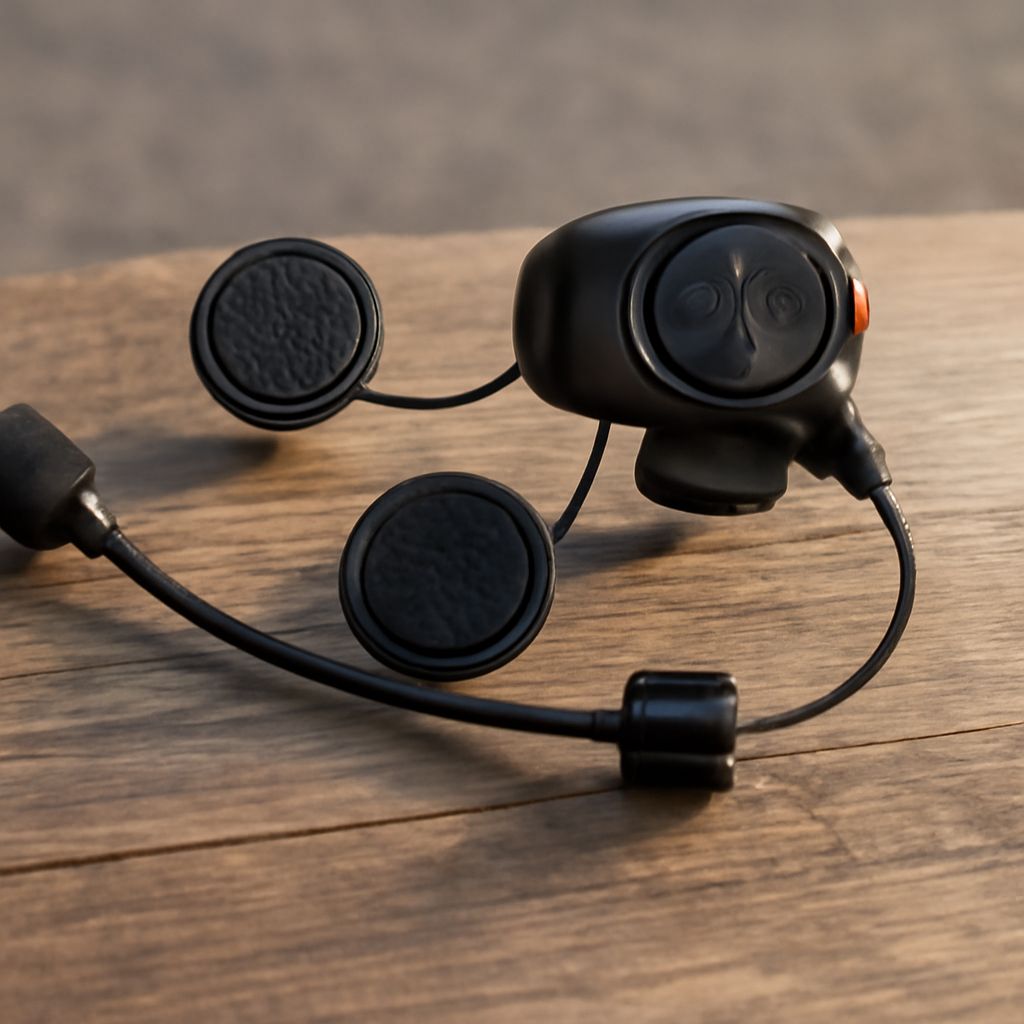
Most Bluetooth communicator systems use a universal clamp mount that fits most helmet chin bars. Speakers sit in the helmet’s ear pockets. Full-face helmets with shallow ear pockets need low-profile speakers — check the spec sheet for speaker thickness if your helmet liner is known to be snug. Open-face and modular helmets give more room for speaker placement but expose the unit to more wind noise, making microphone quality even more important.
Pairing and App Integration
Premium Bluetooth intercom units pair with companion apps that handle firmware updates, audio equalizer settings, and contact management for speed-dial intercom connections. Sena’s app and Cardo Connect both add features that aren’t accessible through button controls. Voice command integration with Siri and Google Assistant lets you take calls and skip tracks without removing a hand from the bars.
Before committing to any Bluetooth intercom system, check whether your regular riding partners use the same brand — cross-brand Bluetooth intercom pairing is possible but often delivers reduced range and feature compatibility compared to same-brand pairs.