3D Printer Bed and Glass 3D Printers: Printing with Glass Explained
3D Printer Bed and Glass 3D Printers: Printing with Glass Explained
You’re upgrading your 3D printer’s build surface, or you’re curious about what a glass 3d printer actually does compared to standard FDM printing. The 3d printer bed is one of the most impactful components for print quality and first layer adhesion, and glass is one of the most popular bed surface materials. Understanding what 3d printer glass beds offer, how to use them effectively, and what a 3d glass printer means in the broader sense of printing on or with glass helps you make better decisions about your setup.
Whether you’re replacing a worn bed surface with a 3d printer glass option, researching a glass printer for specialty applications, or exploring the meaning of 3d glass printer technology in an industrial context, this guide covers the practical details across all interpretations.
3D Printer Bed: Types and What They Do
The build plate, also called the bed, is the surface on which the first layer of a print is deposited. The bed material determines how well prints adhere during printing and how easily they release when complete. Common bed surface options:
Borosilicate glass: The most popular upgrade for FDM printers. Glass provides an extremely flat, dimensionally stable surface that PLA, PETG, and ABS all adhere to reasonably well when heated. Glass beds are heavier than spring steel or PEI alternatives but provide excellent flatness consistency.
Spring steel with PEI coating: The current default on many modern printers (Bambu Lab, Prusa MK4, Bambu Lab A1). PEI is a thermoplastic that provides strong adhesion when hot and releases prints cleanly when cooled. Spring steel sheets flex for easy print removal. Popular and effective but can degrade with certain filaments over time.
Glass with PEI coating: Combines glass flatness with PEI adhesion properties. Available from third-party suppliers for most popular printer sizes.
3D Printer Glass: Why Borosilicate Works Well
Borosilicate glass is specifically used in 3d printer glass applications because its low coefficient of thermal expansion keeps the bed dimensionally stable through the temperature range used in FDM printing (60-110°C for most materials). Standard window glass would expand and contract more dramatically, potentially causing adhesion failures or bed leveling drift during printing.
The surface of a glass bed produces a smooth, glossy bottom surface on prints. This is a desirable aesthetic for display pieces and functional parts where the bottom surface needs to look clean. For parts where surface finish is less important, the glass aesthetic is irrelevant.
Glass beds work best when clean and free of skin oils. A wipe with isopropyl alcohol before each print session removes contamination that would otherwise prevent first layer adhesion. For materials that don’t adhere well to bare glass (PETG can be tricky), applying a thin layer of PVA glue stick or hairspray provides a grip-enhancing coating.
What Does a Glass 3D Printer or Glass Printer Mean?
The term glass 3d printer or 3d glass printer has two distinct meanings depending on context:
FDM printer with a glass bed: The most common meaning. An FDM printer that uses a borosilicate glass build plate rather than other surface materials. This is an accessory or modification rather than a distinct printer category.
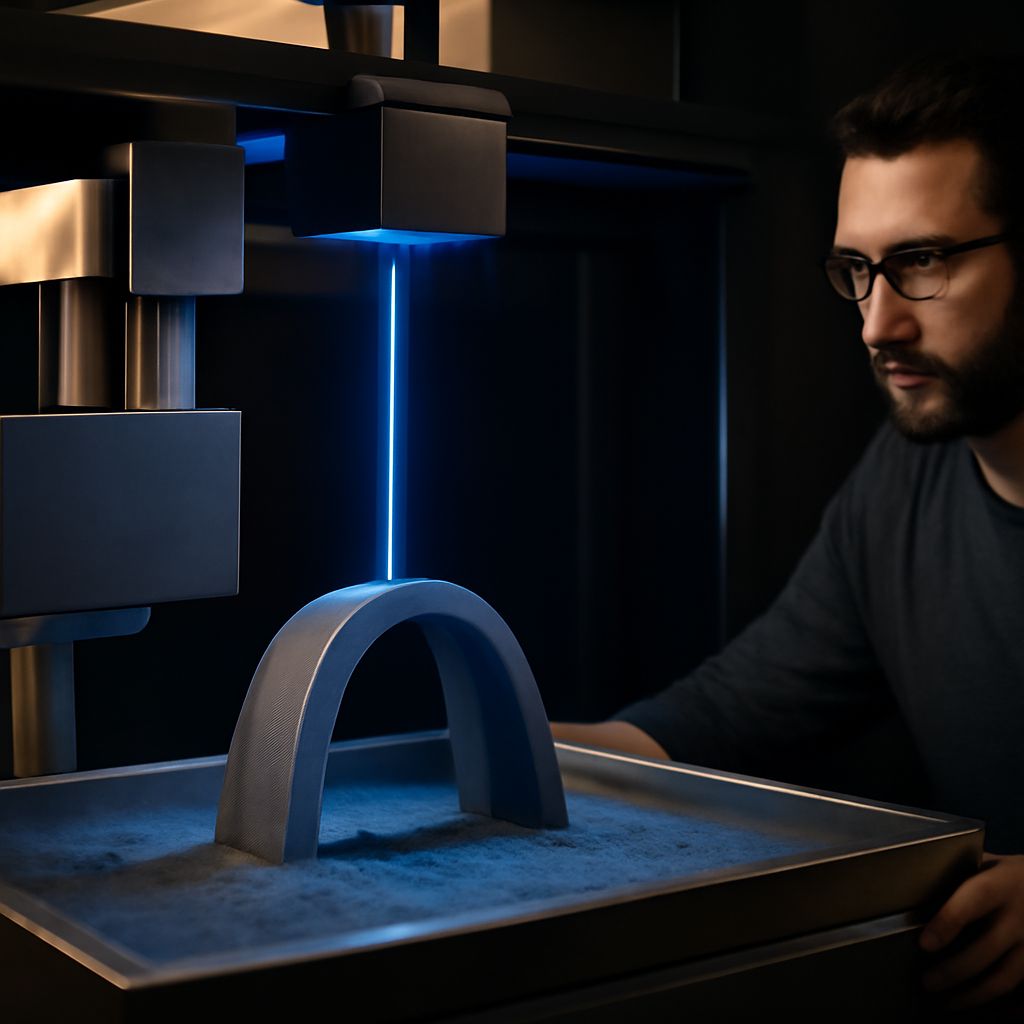
Industrial glass 3D printing: A specialized process that actually prints with glass as the material, not just on glass. This technology extrudes molten glass through a high-temperature nozzle at temperatures above 1000°C. MIT’s Mediated Matter Group developed G3DP (Glass 3D Printing) as a research process. These are research-grade or specialized industrial machines, not consumer products, and they cost hundreds of thousands of dollars.
A 3d glass printer for consumer applications doesn’t exist at the time of writing. Any product marketed as such is almost certainly referring to a printer with a glass build surface.
Setting Up and Leveling a 3D Printer Glass Bed
Installing a glass bed on an FDM printer that previously had a different surface requires re-leveling or adjusting the Z-offset because the glass thickness adds to the bed height.
Most glass beds are 3-4mm thick. After installing the glass, lower your Z-offset by this amount as a starting point and fine-tune from there. On printers with automatic bed leveling (ABL), run the leveling probe routine again after installing the glass so the firmware maps the new surface height accurately.
Borosilicate glass beds typically use binder clips or a silicone sock system to attach to the heated bed frame. Ensure clips are positioned to avoid interference with the print head at the edges of the build area, and verify that the glass is flat against the heater surface without gaps that would create uneven heating.
Bottom line: A glass 3d printer bed upgrade provides excellent flatness, a smooth bottom surface finish, and good adhesion for the most common filament types. For truly easy print removal, a PEI spring steel sheet is often more convenient in daily use. A 3d glass printer in the sense of printing with glass as the material is industrial research technology, not a consumer product category.